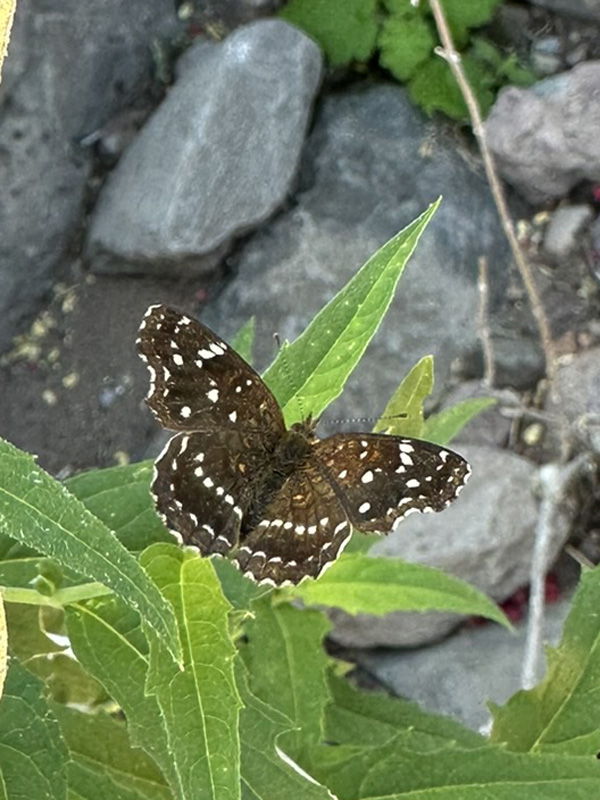
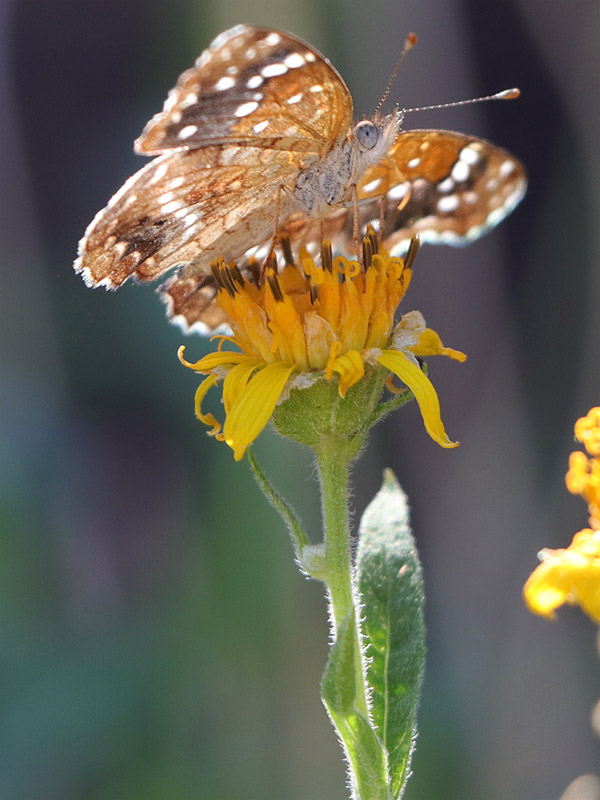
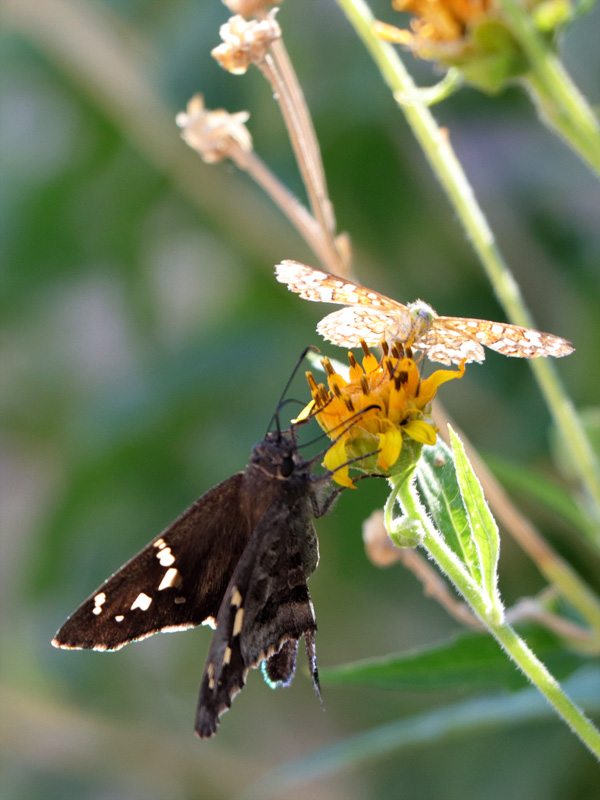
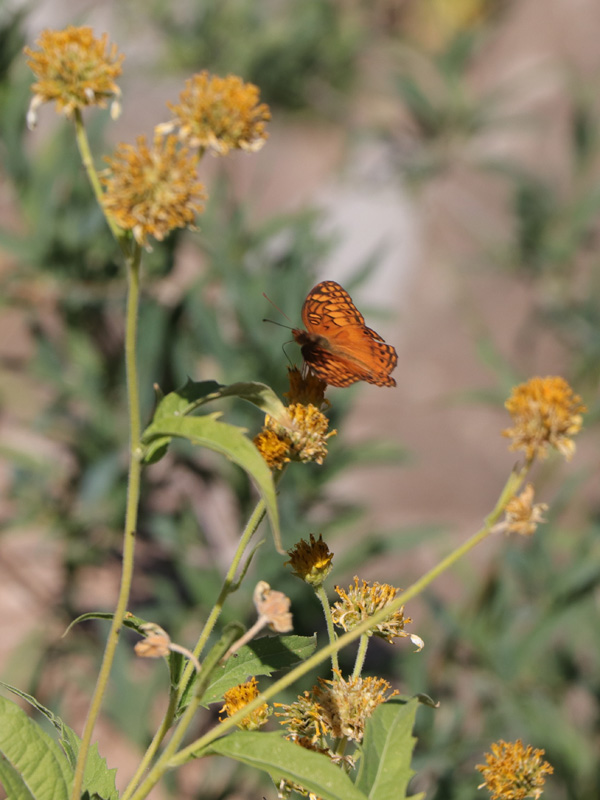
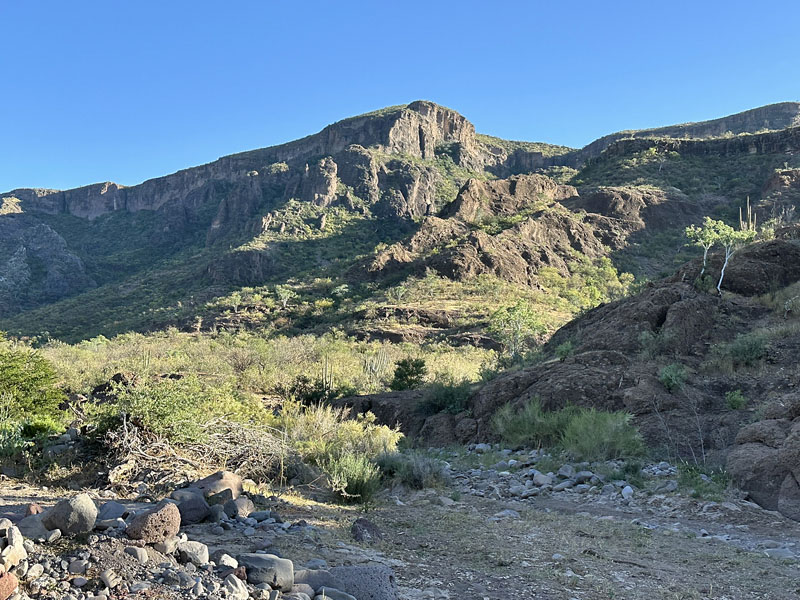
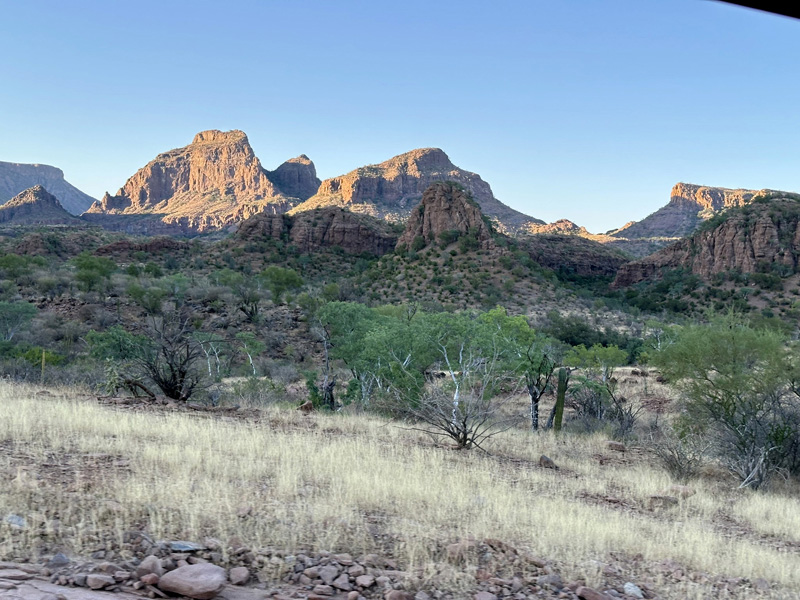
THE HIVE JAN–FEB 2026
Sierra de Guadalupe — November 2025
Mulegé to Arroyo San Miguel, BC
Less than a week after arriving in Mulegé, I was already on my way into the Sierra de Guadalupe west of town. I was excited to be making a trip so early in November because there had been some substantial rain in September and the news was that it was still very green and lush. I have made multiple trips to the region, but most were made late in November or in the spring months, so I was hopeful for an excellent botanizing experience. To read about those previous trips and compare photos from with this trip, see the list below.
The Sierra de Guadalupe is situated within the northern reaches of the Sierra de la Giganta Ecoregion. Elevations range from about 500 feet (278 m) where the foothills begin, to about 3600 feet (c. 1100 m). Standing water in arroyos, seeps and shady pools is common and there is flora and fauna not usually found at lower elevations around the town of H. Mulegé and along the coast.
The Sierras were beautiful, though there was not as much water in the arroyos and it was not as green as I had expected, given the news I’d been hearing. Nonetheless, there were plenty of vines, flowers and clouds of insects, and lots to investigate along the way.
For previous Sierra Guadalupe trips, see: Apr 2013 (San José de Magdalena - SJdM); May 2014 (Pacific route to La Ballena); Jun 2015 (SJdM); Jan 2018 (Arroyo las Chuparrosas in southern valley); Jan 2019a and Jan 2019b (Sierra Zacatecas & Sierra Guadalupe via Pacific route); Jul 2020 (Arroyo San Nicolás & SJdM); May 2021 (SJdM to Mulegé via ex-Misión de Guadalupe); Feb 2024 (Rancho Ingerto, Vado de la Virgencita, the Seep & Rancho El Aguajito); and Feb 2025 (Rancho El Rincón and lichen/bryophyte hunt).
For a full list of this month's plants and other organisms (with family, latín name and common names in both English and Spanish), visit this page.
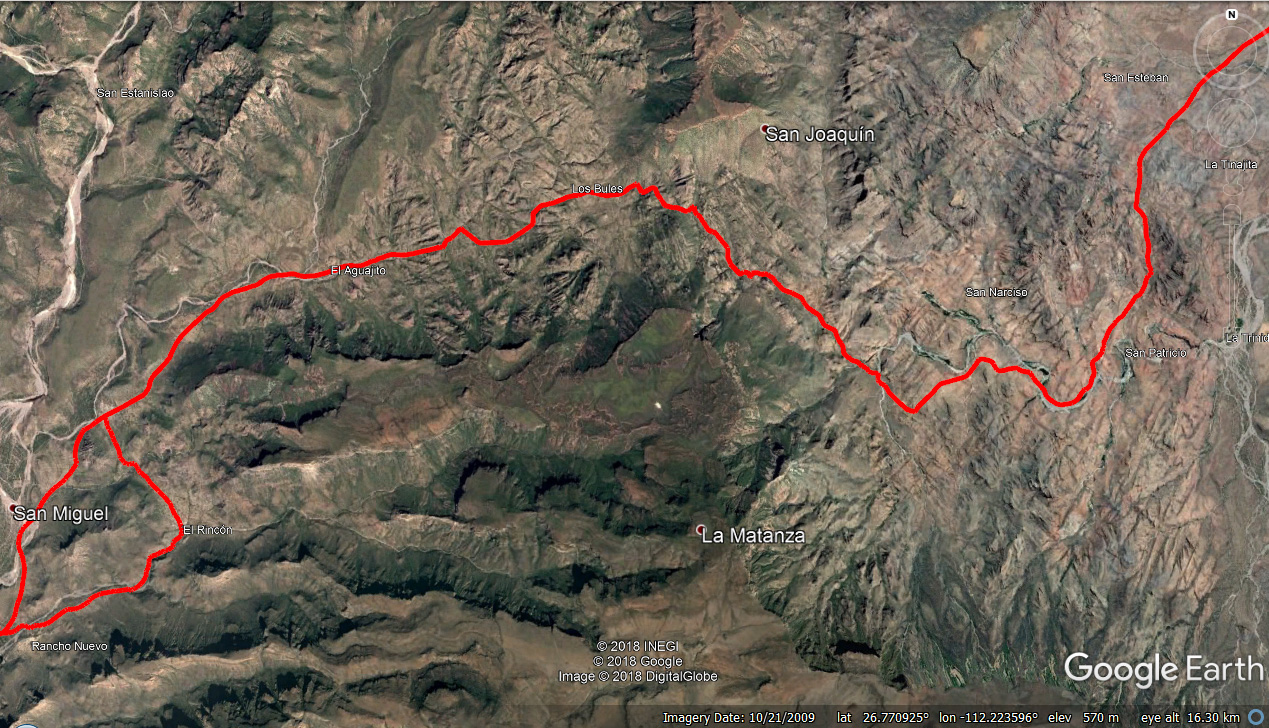
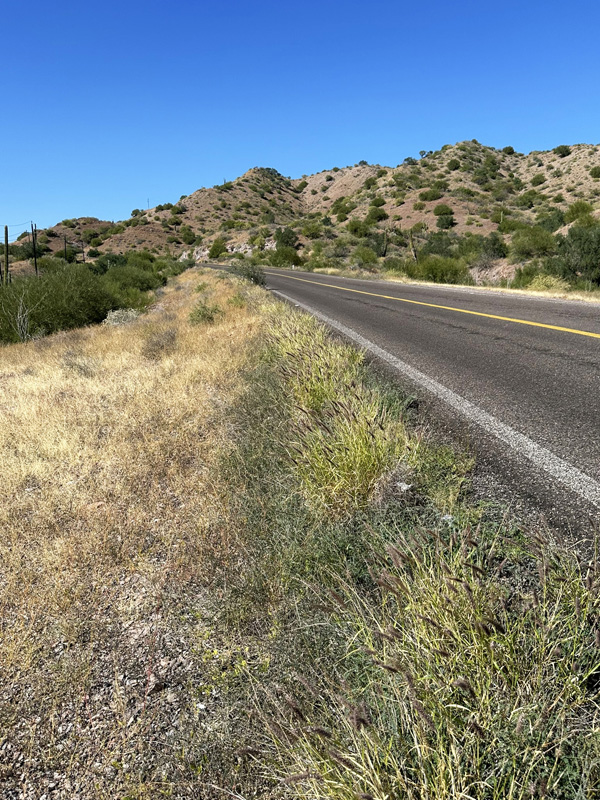
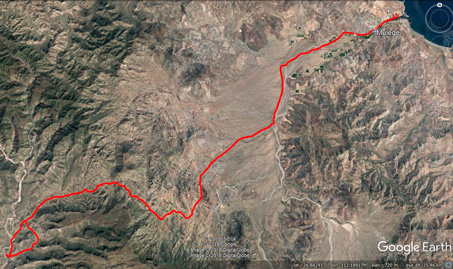 The map shows the route we took up into the mountains from Mulegé via Arroyo San Patricio to Rancho el Rincon and a previous collection site nearby. The first pass near San Patricio is about 820 ft (250 m) elevation and from there, it's a rollercoaster ride with numerous short grades reaching 1740 ft (530 m). The road was in terrible condition because the grader hadn't yet passed through on this main branch road from Mulege to the Pacific coast. The ranch is approx. 29 miles (47 km) from Hwy 1, and there is an elevation gain of 1410 ft (c. 430 meters). Additional photos of the landscape along this route can be seen in the first section of my July 2020 entry.
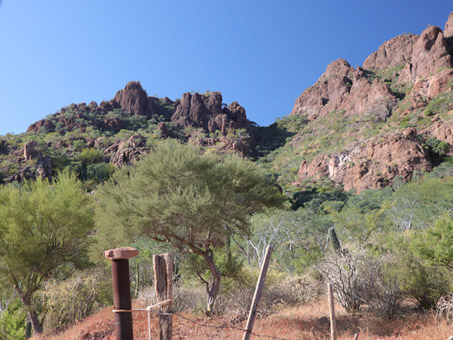
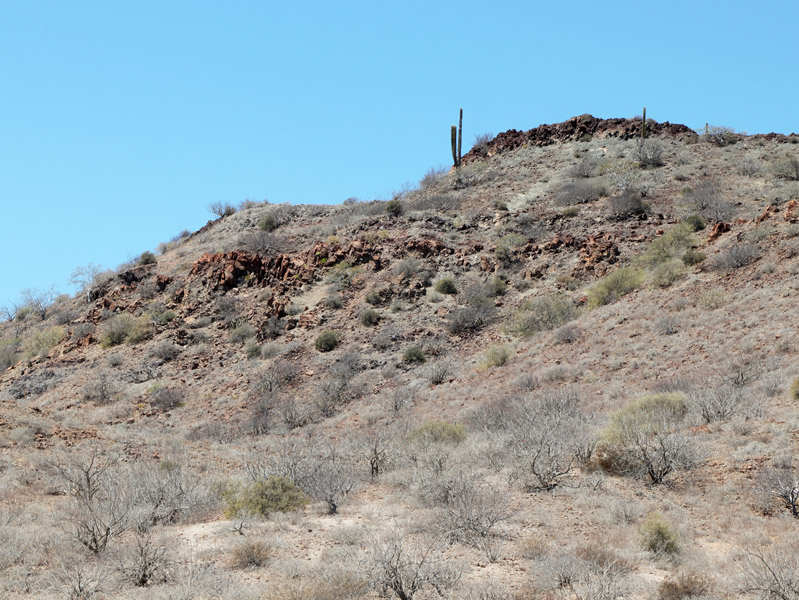
On the eastern flank of the sierras as we leave the foothills and valley below and make the first grade near San Patricio.
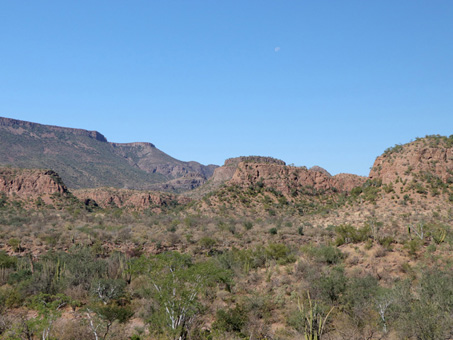
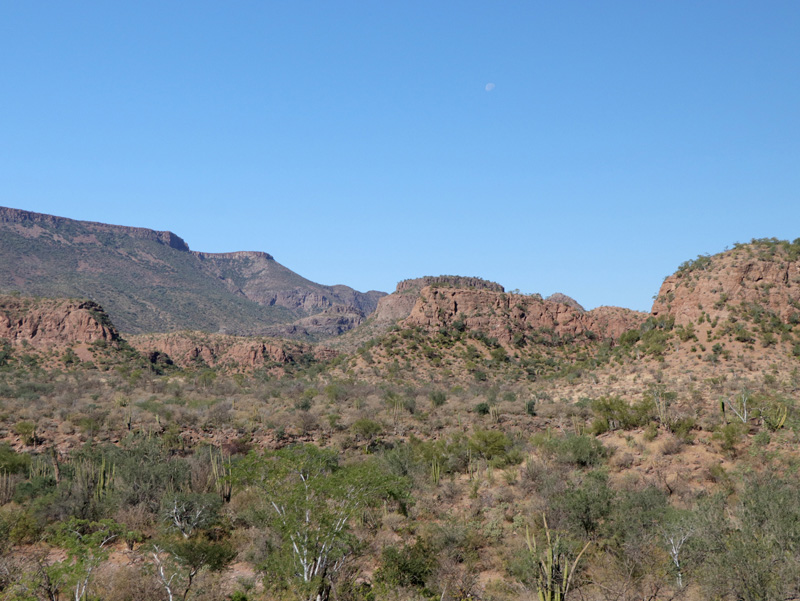
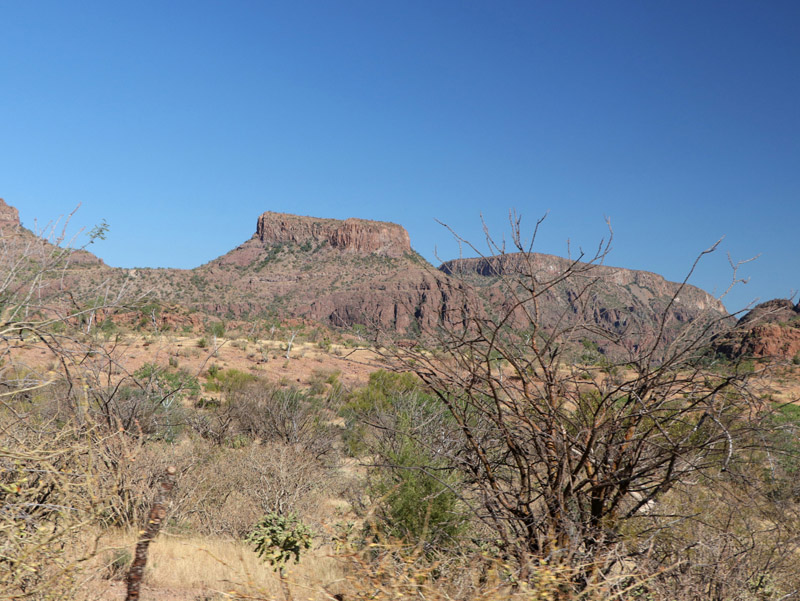
Volcanic mesas at the lower elevations (c. 650-820 ft - 200-250 m), near Rancho San Narciso.
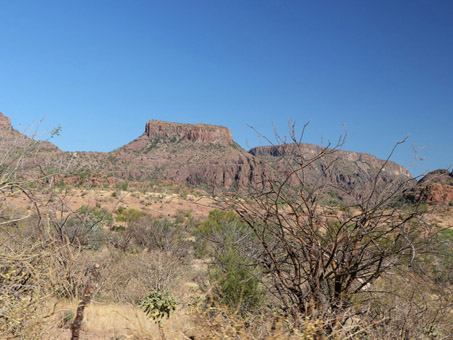
Lower elevations Near San Narciso.
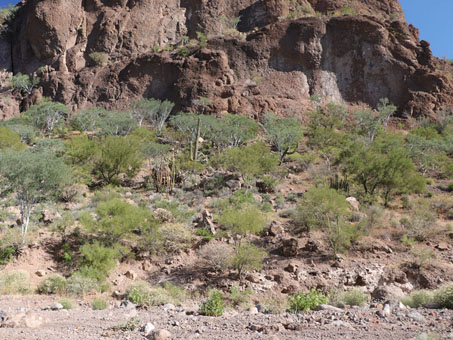
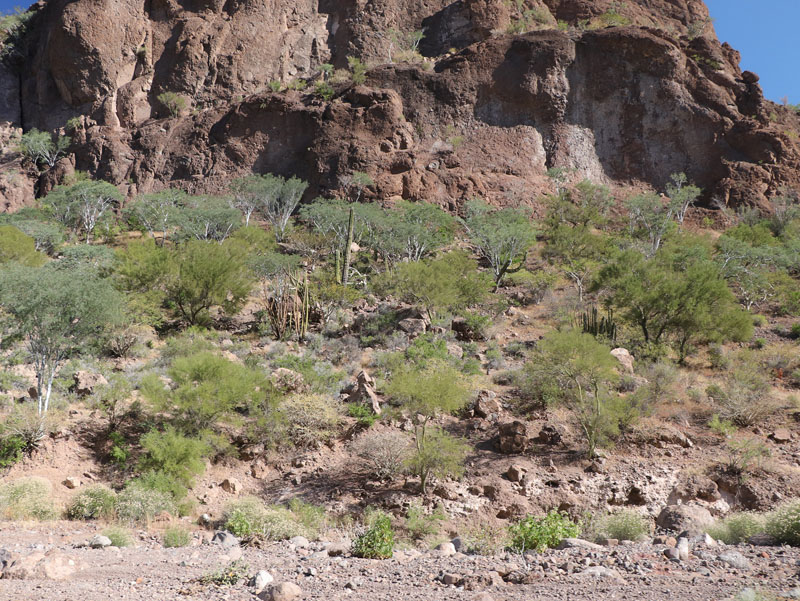
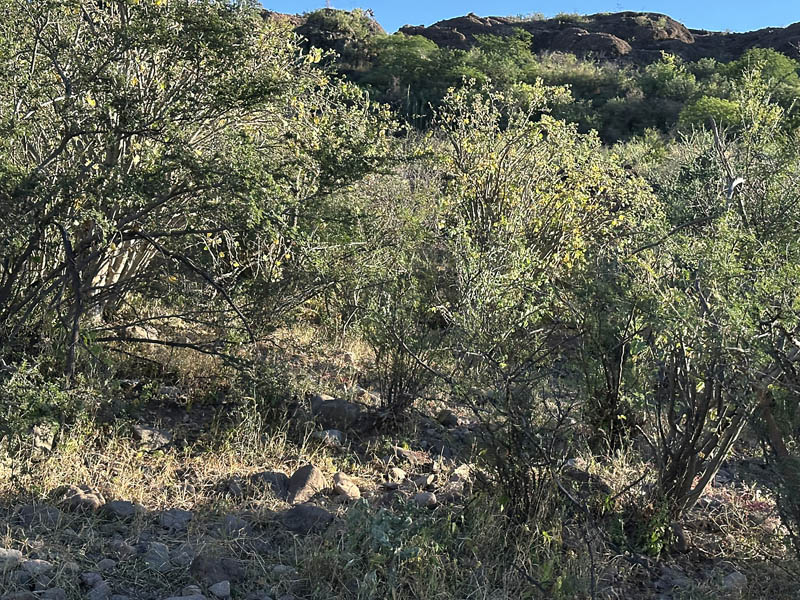
A rocky hillside with lots of very leafy trees, near Rancho el Ingerto.
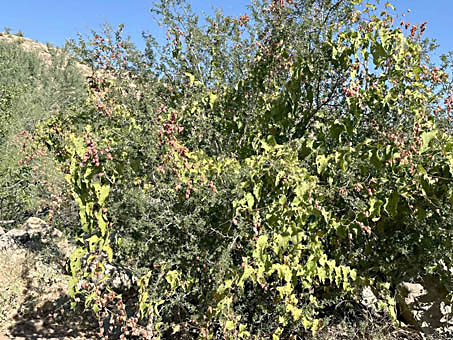
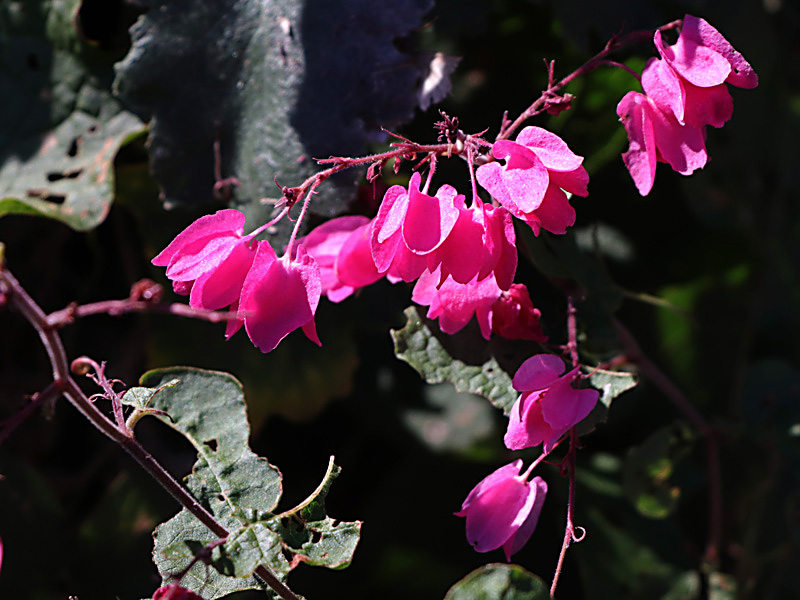
While the Coral Vine (Antigonon leptopus) was waning, there were still some plants in bloom.
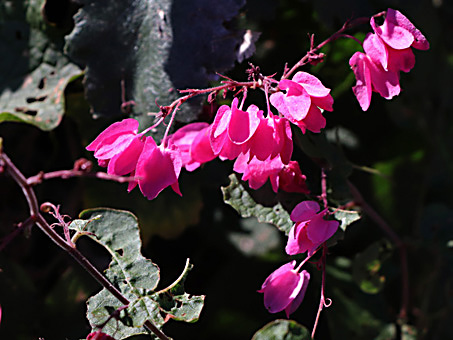
The flowers of Coral Vine are very tiny, enclosed within these large showy bracts.
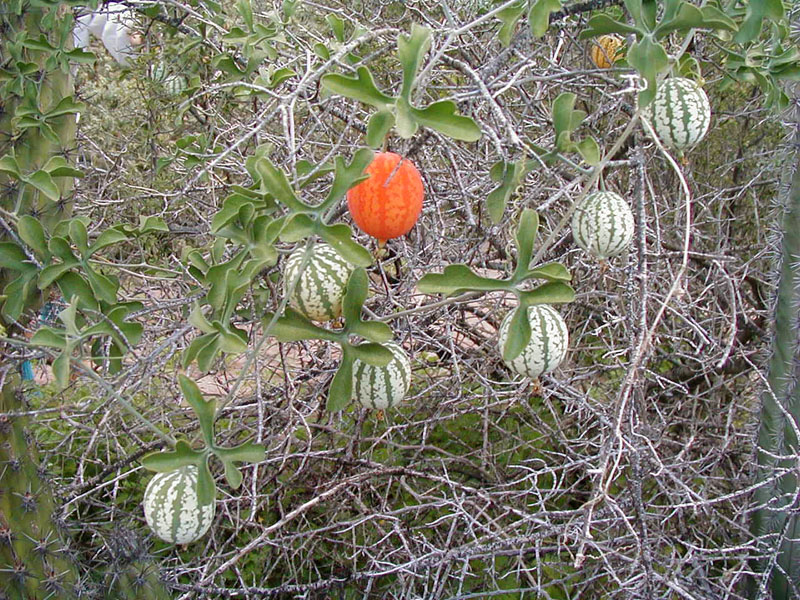
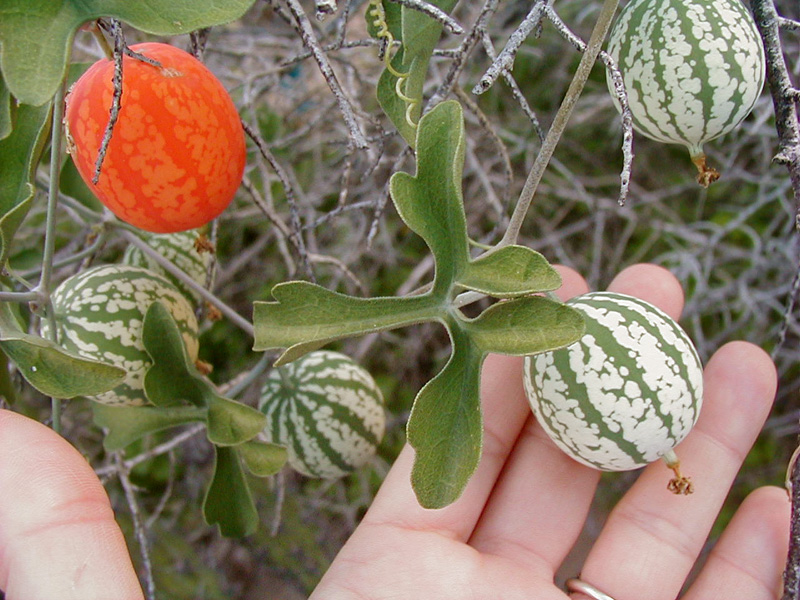
I wasn't able to get a good photo of this woody, perennial Coyote Melon vine, (Ibervillea sonorae) so I'm including these images from another occasion. The species is not very abundant but is common and easily overlooked most of the year. The ripe pepos are dark orange-red and have a bitter or sweet, fleshy, dark red pulp. The plant dies back to it's woody branches and stores nutrients in a large, tough, fibrous tuber that can reach the size of football, part of it usually visible above ground.
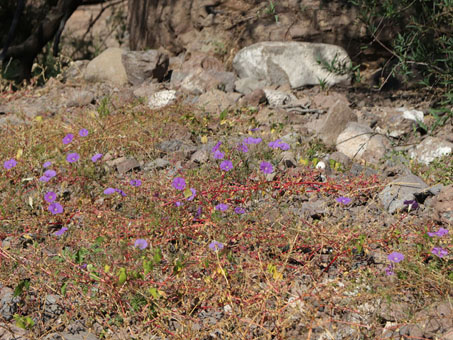
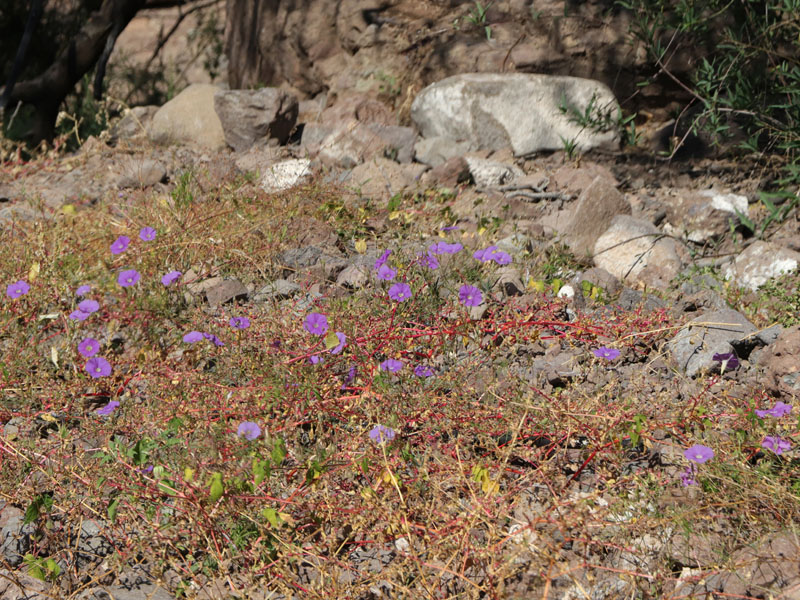
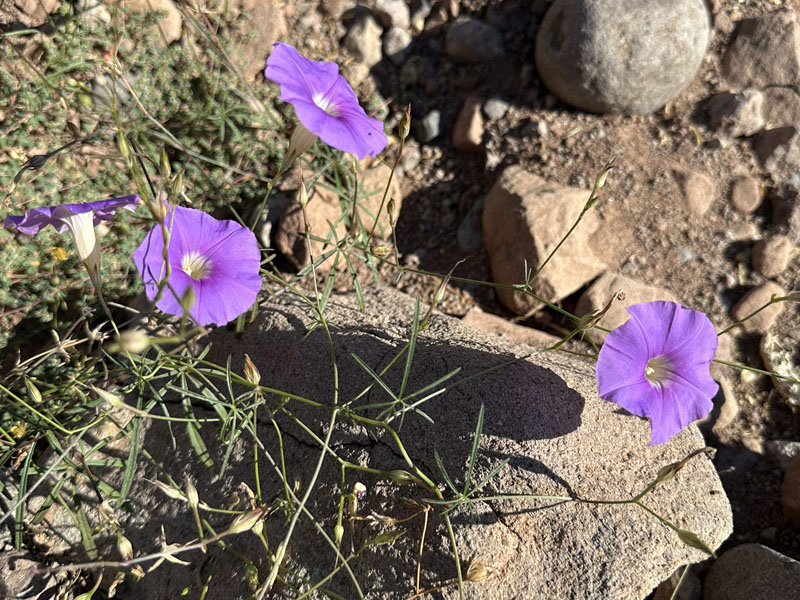
Triple-leaf Morning-glory (Ipomoea ternifolia var. leptotoma) was blooming heartily on the dry slopes and arroyo bottoms along the way once we entered the Sierras.
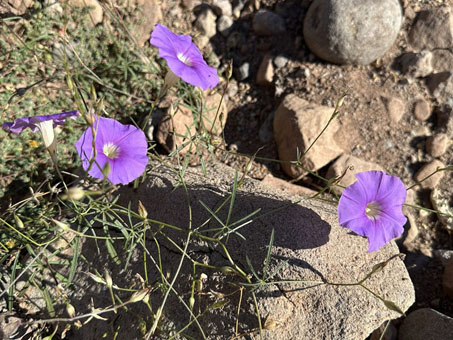
The leaves of this Morning-glory species are filiform, 3-7 lobed and often hard to see. The flowers are about 3-4 cm D with a white tube about the same length. Fruit is a papery capsule.
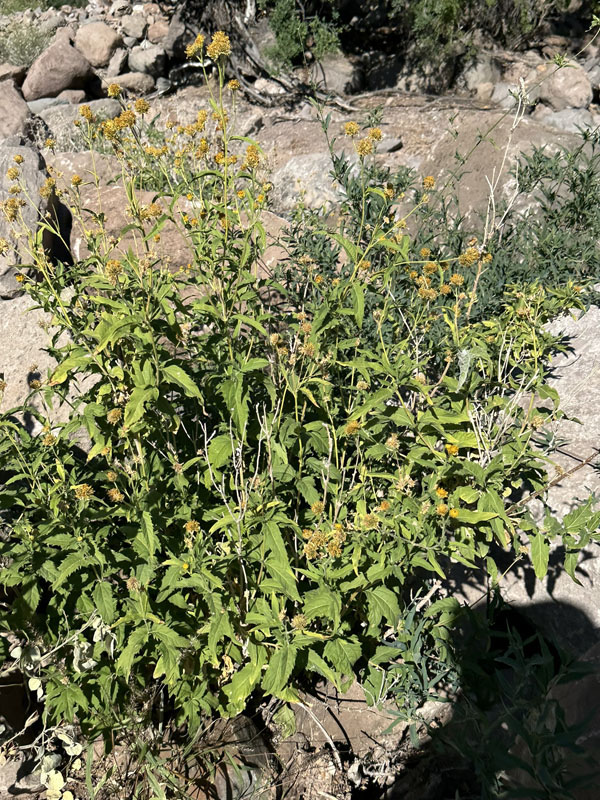
There was a large group of the following composite species in the arroyo bottom near Rancho el Ingerto and they and the air were alive with butterflies and other insects.
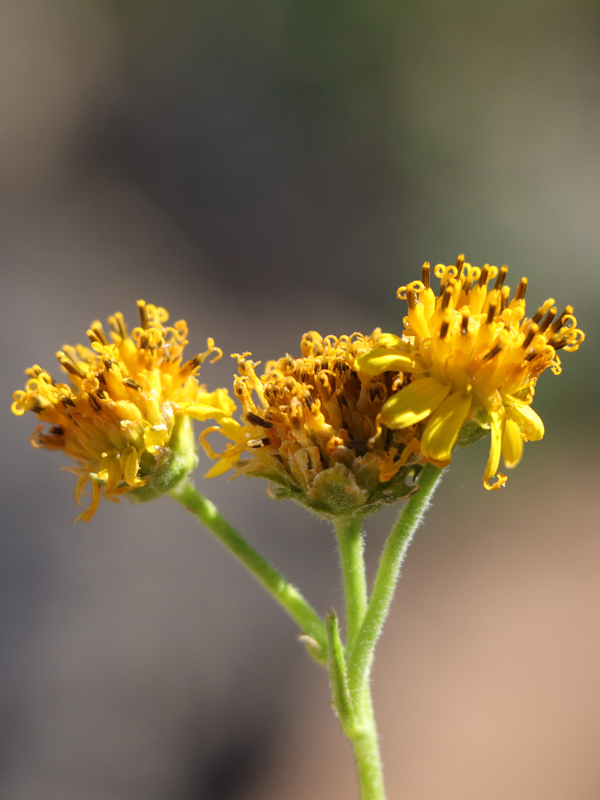
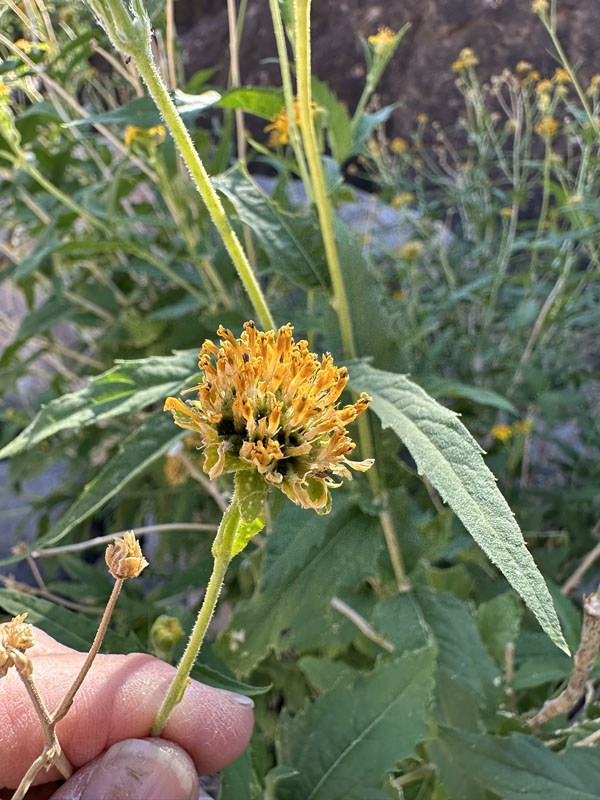
I'm not sure what the species actually is. iNaturalist thinks it's Golden Crownbeard (Verbesina encelioides), which I've collected around town in Mulegé, but the flower heads of the plants here had phyllaries that were short and ovate, rather than long and linear. The flower heads were small, only about 2.5-3 cm D, not 4-5 cm D. Additionally, the lanceolate leaves were generally quite narrow, with larger leaves on plants in the shade.
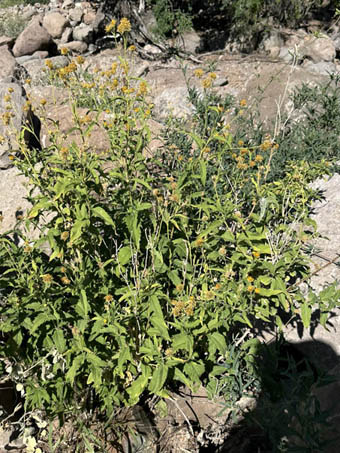
The plants were bushy and about 1-1.5 m high.
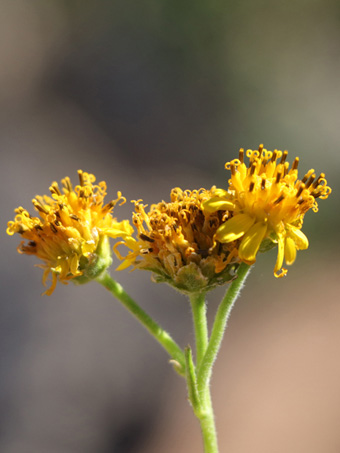
Flower heads of the unidentified composite.
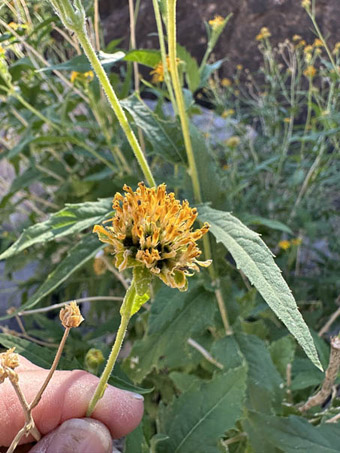
Flower head of the composite with ripening fruit.
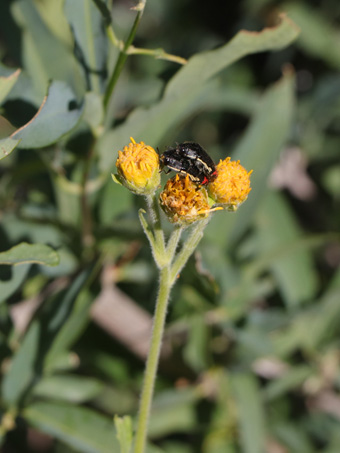
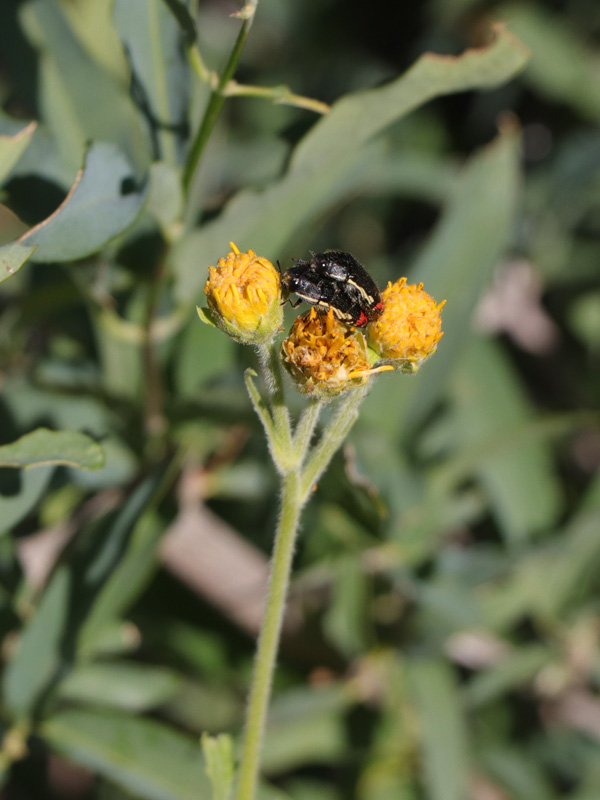
Yellow-bordered Flower Bups (beetles; Acmaeodera flavomarginata) on the composite flowers.
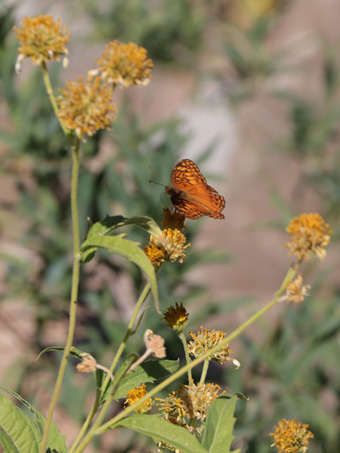
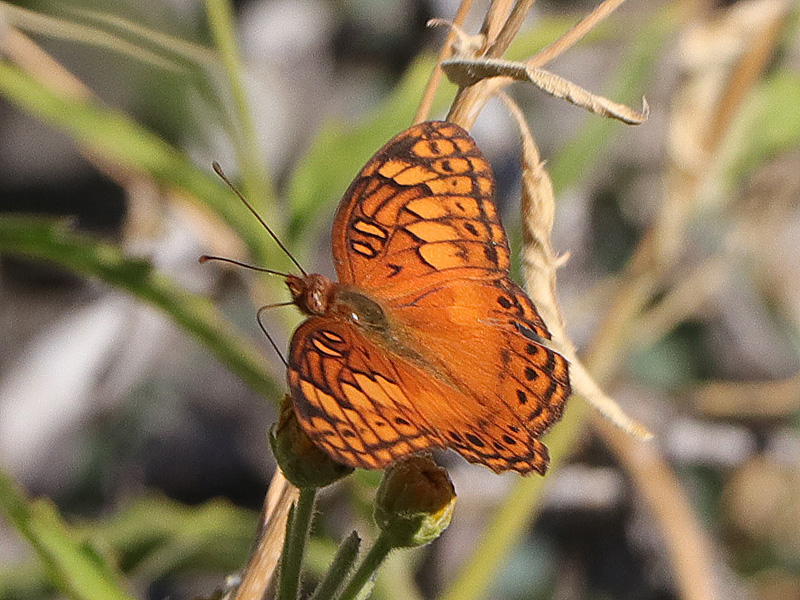
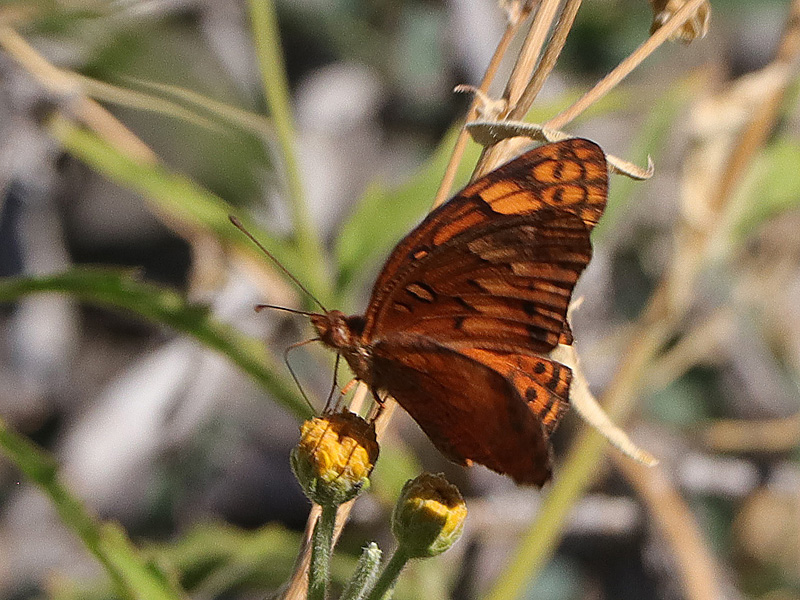
So many butterflies, this one a new species for me: Mexican Frittilary (Euptoieta hegesia subsp. meridiania).
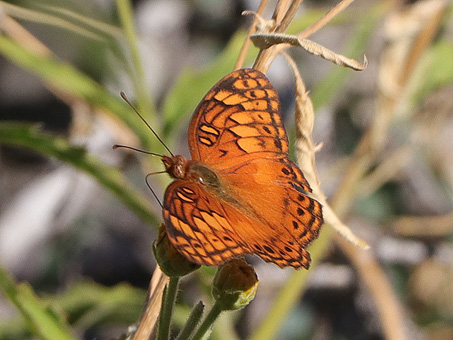
The Mexican Frittilary is smaller than the Gulf Coast Frittilary that I've often seen around Mulegé, especially on Passion Flowers.
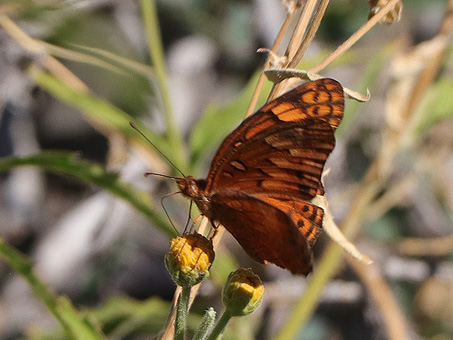
The Mexican Frittilary lacks both the white spots on its forewings and the checkered effect on the inferior surface of the wings.
And in contrast to my experiences with the Gulf Coast Frittilary (Dione incarnata), this species was quite gregarious, often with 3 or 4 individuals feeding together on a plant. It also wasn´t as skittish around us, allowing me to get up fairly close for photos.
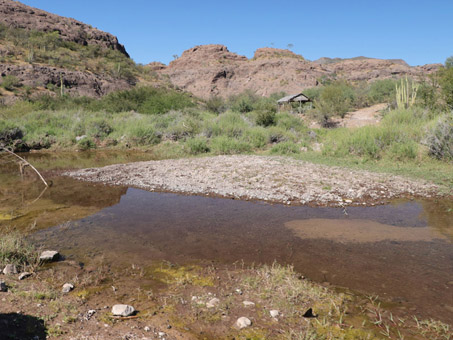
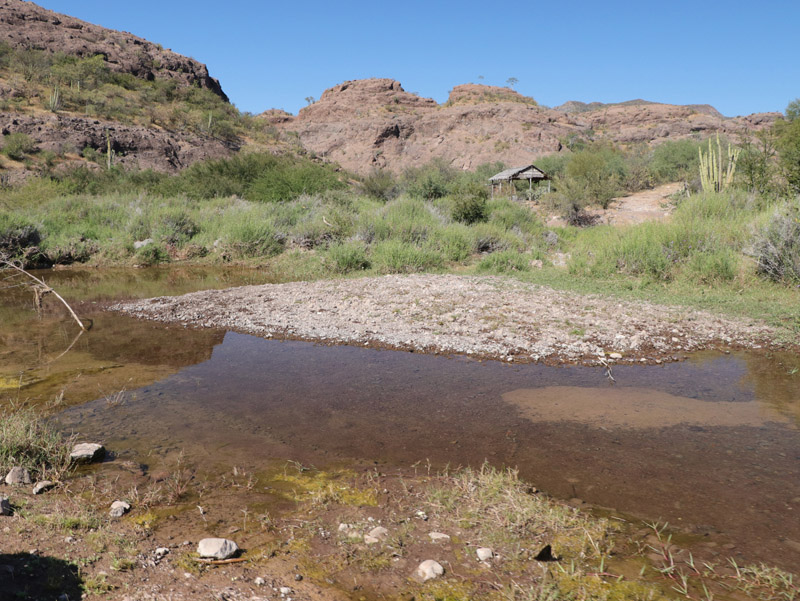
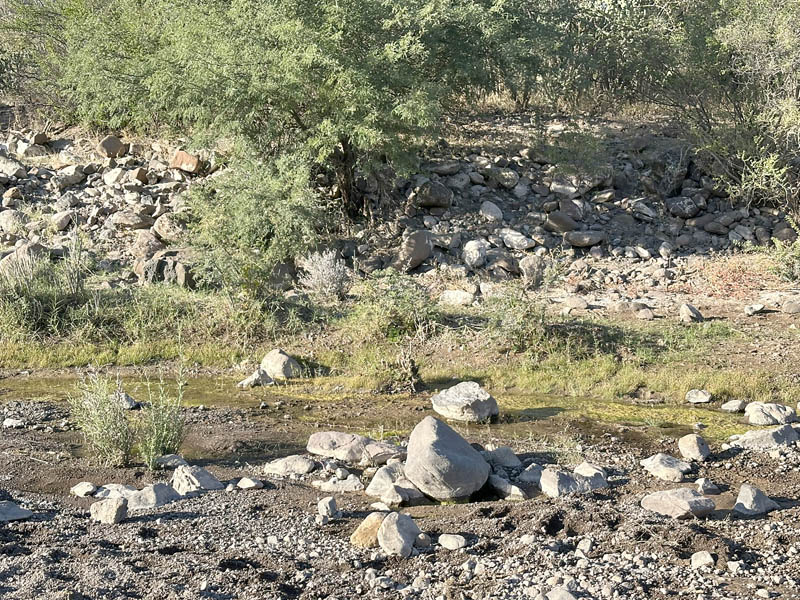
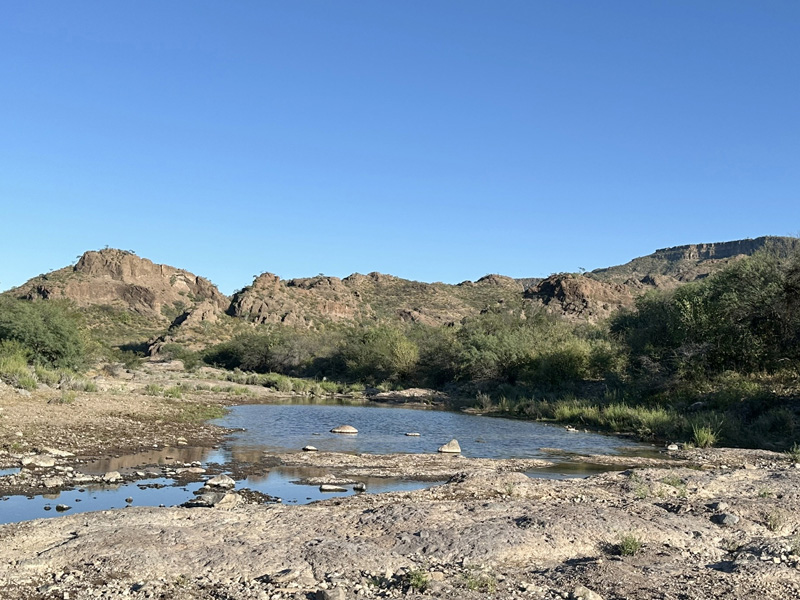
There was not as much standing water in the pools and road crossings as I had expected.
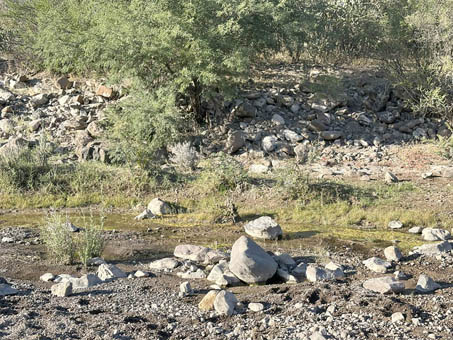
There also was not a lot of growth around the edges of any of the pools, possibly due in part to trampling by livestock.
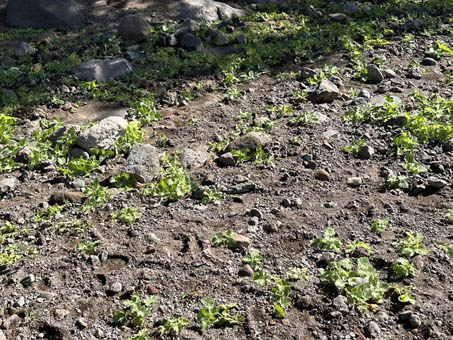
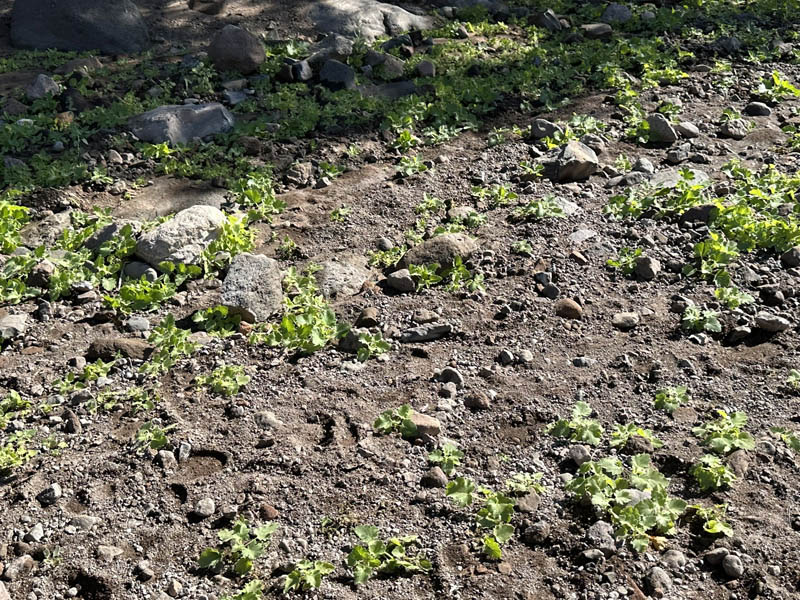
A wet arroyo bottom where there wasn't any standing water, young Rock Nettle (Eucnide cordata) & other species were sprouting.
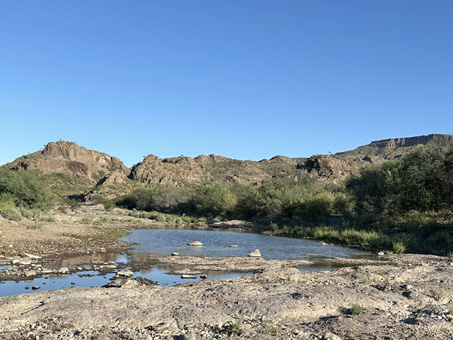
The green hills of the Sierra form a backdrop to one of the larger natural pools in the arroyo close to Rancho el Aguajito.
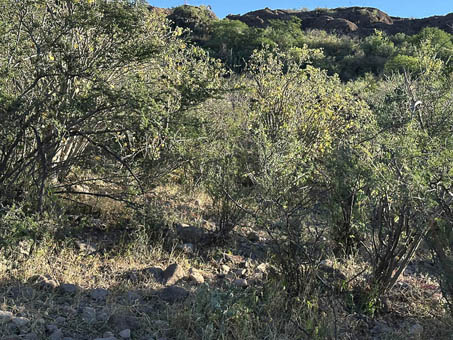
At higher elevations like here at c. 1410 ft (430 m), the shrubs & trees were green & bushy along the road. On my previous trip it was mostly bare.
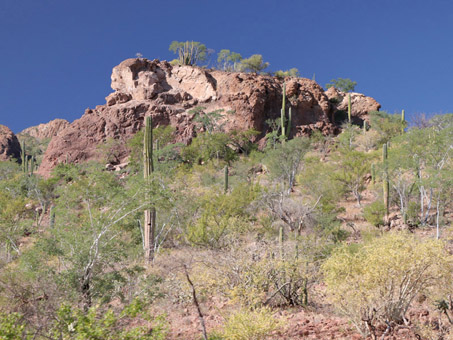
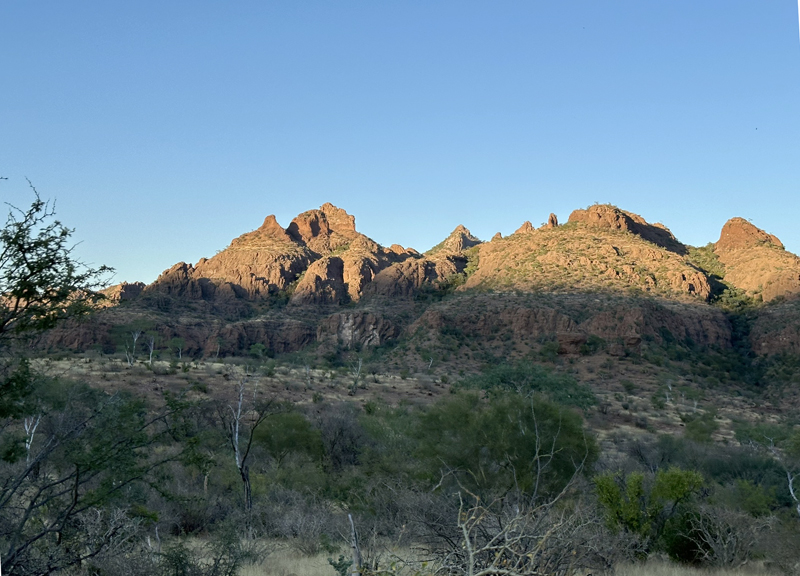
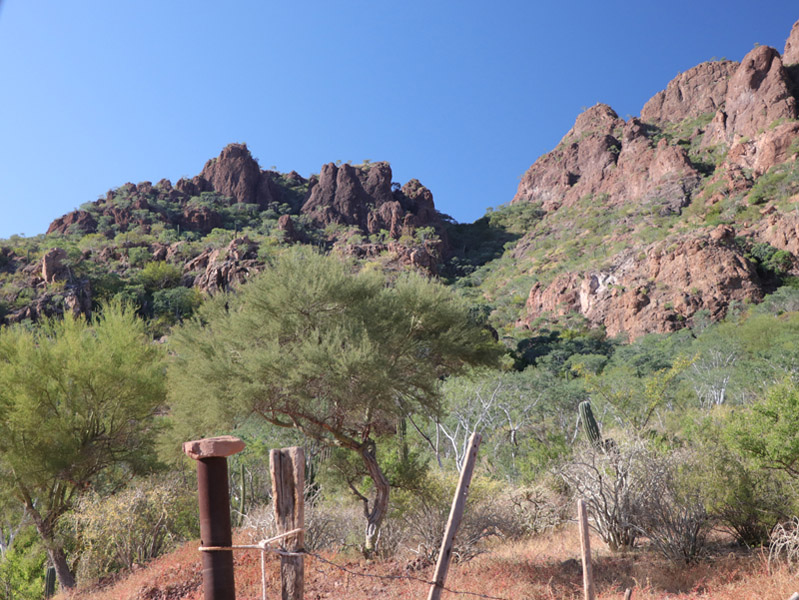
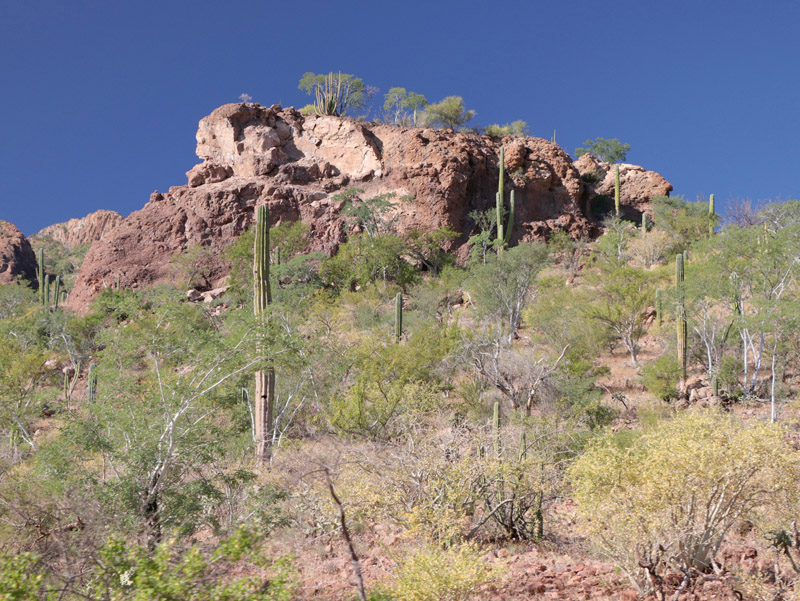
Just one of the picturesque rock outcrops that we passed along the way.
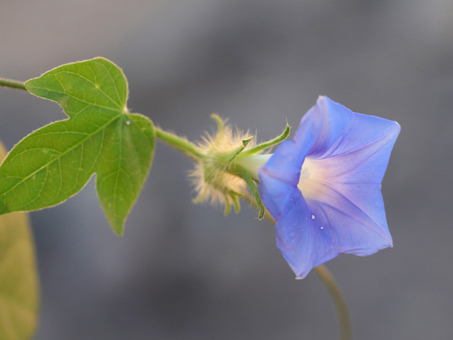
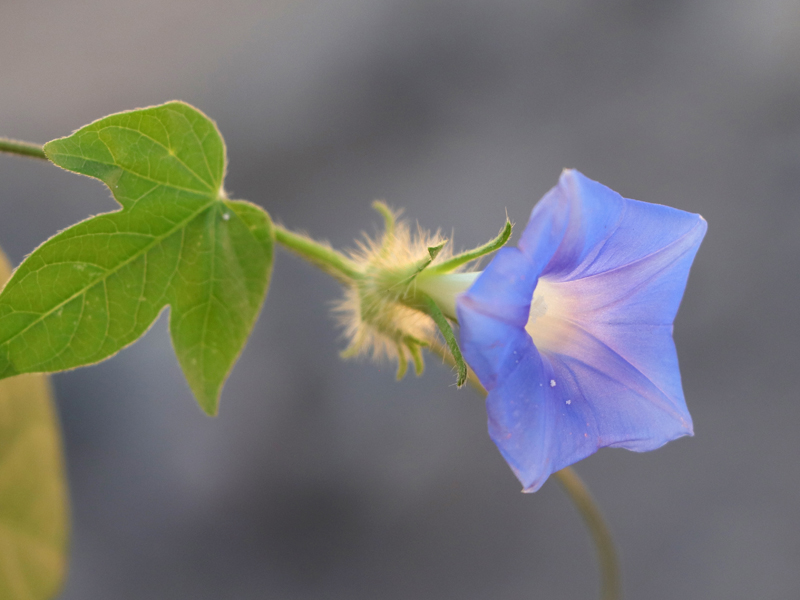
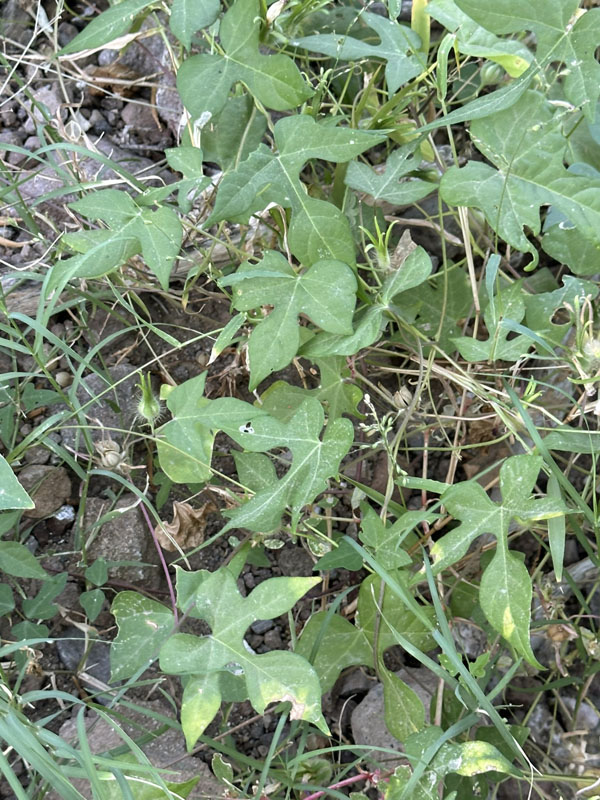
Ivy-leaf Morning-Glory (Ipomoea hederacea) could be seen occasionally, mostly within the shady undergrowth. Stems can reach to 5 m L.
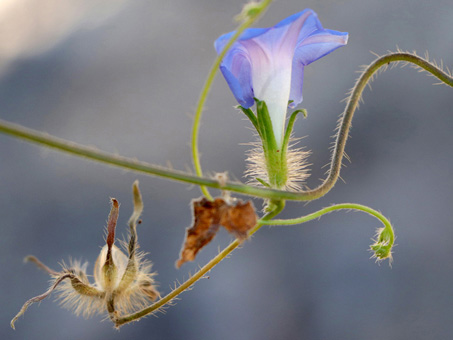
Corollas were 5-6 cm L. This uncommon species of Morning-glory can be found from the sierra here, around Mulegé & south to the Cape.
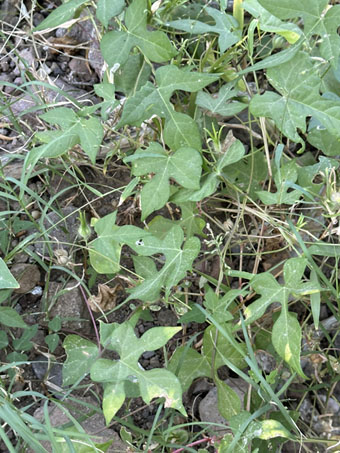
Leaves of the Ivy-leaf Morning-Glory are 3-5 lobed, each lobe with an accumulate tip, and 5-14 cm L.
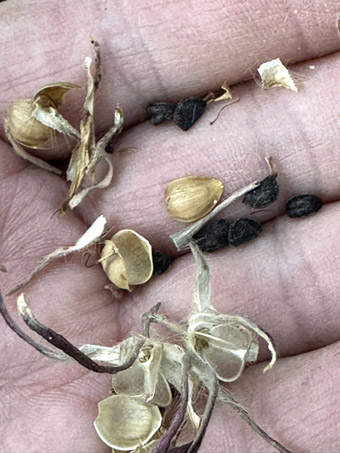
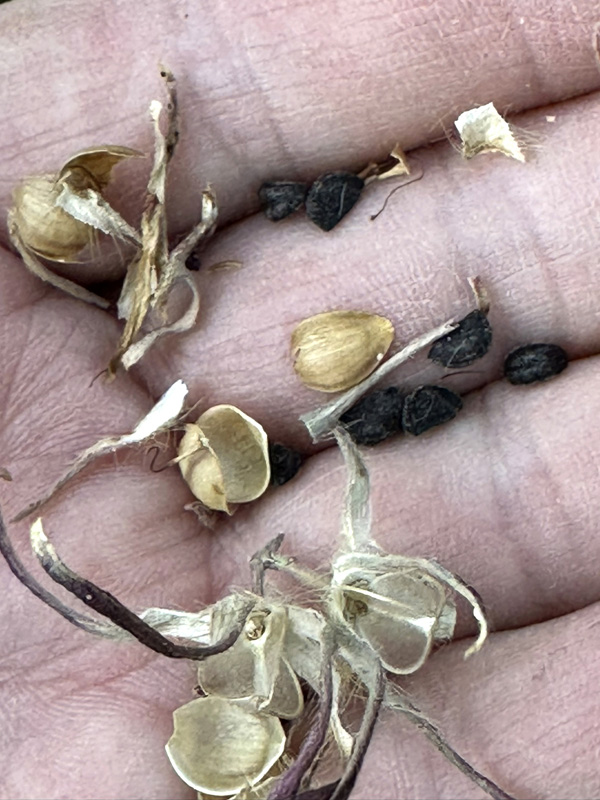
Like in other Ipomoea, the capsules walls are thin with membranous placental walls and 1-4 seeds.
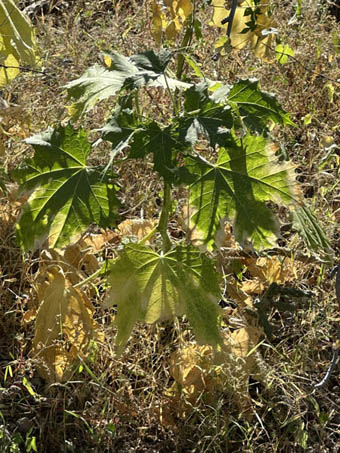
Spotted Bullnettle (Cnidoscolus maculatus) is a BCS endemic. It has a disjunct population N of Ciudad Constitución (about 90-100 miles S of us), explaining why it keeps showing up in only a few places every few years here in the sierras. Don't touch this one!
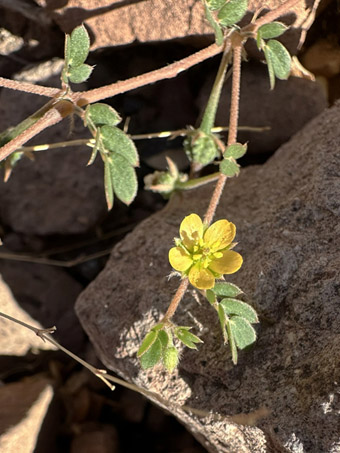
There were numerous signs of California Caltrop (Kallstroemia californica), a prostrate annual, covering the ground, but very few plants that still had flowers and leaves. Above the 6 mm D flower, a small, club-shaped fruit can be seen.
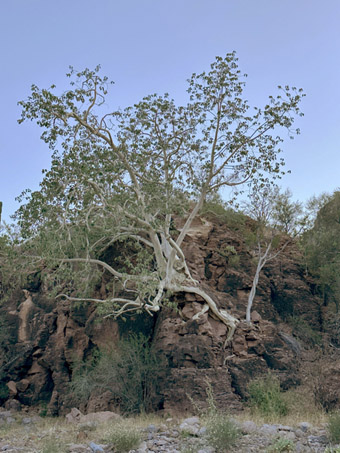
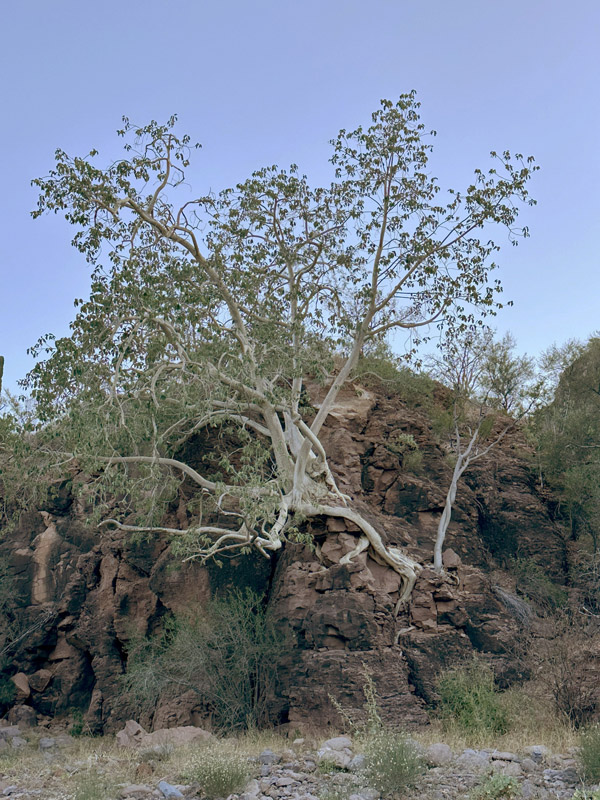
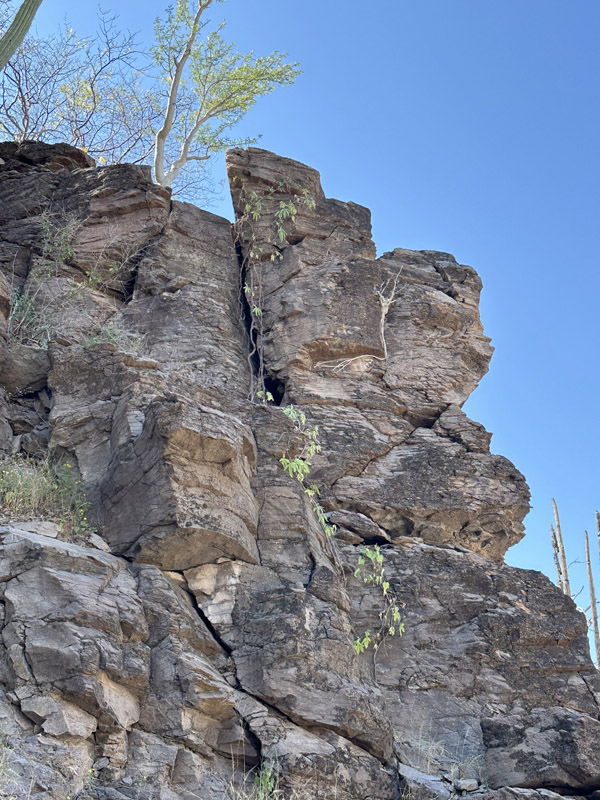
A Wild Fig (Ficus petiolaris) clinging to a volcanic cliff, its roots wedged into cracks, seemingly melded to the rock surface. This tree is easily 5-6 m H.
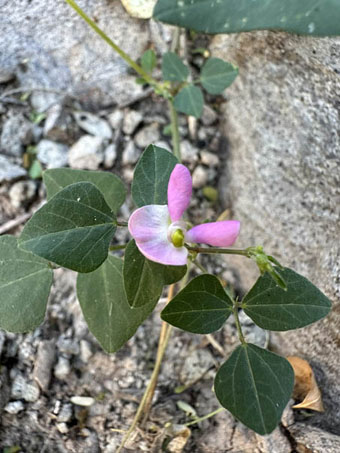
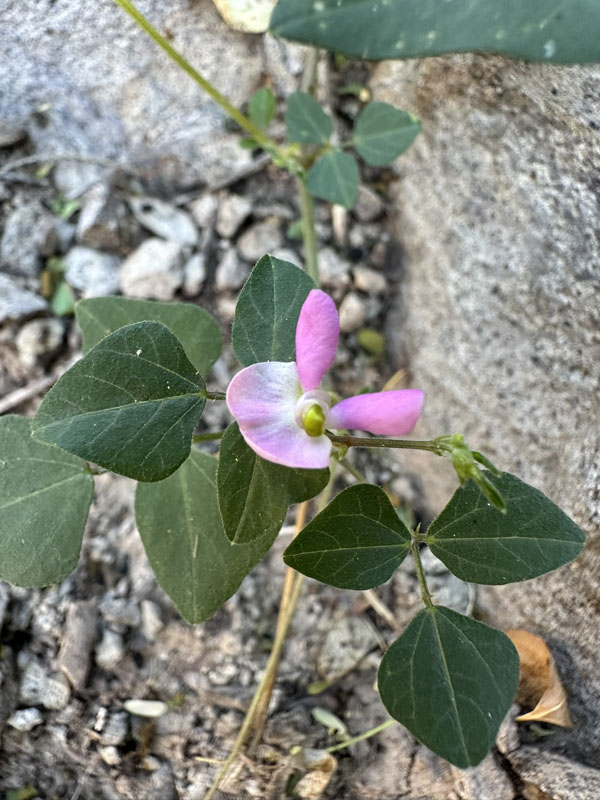
The annual Slimjim bean (Phaseolus filiformis) vine could be seen growing within many different plants along our route, starting just outside town.
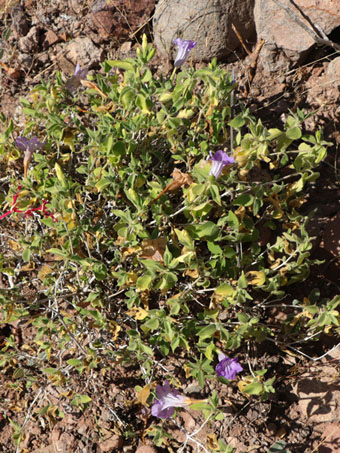
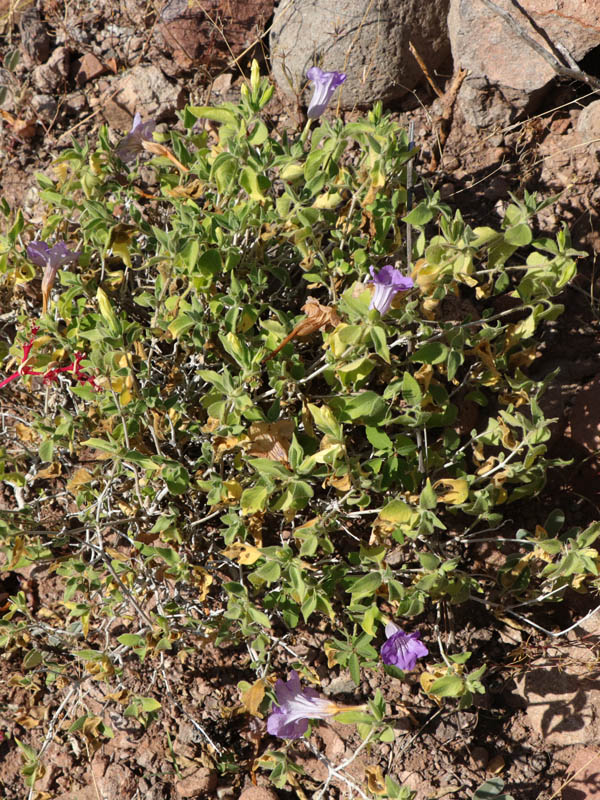
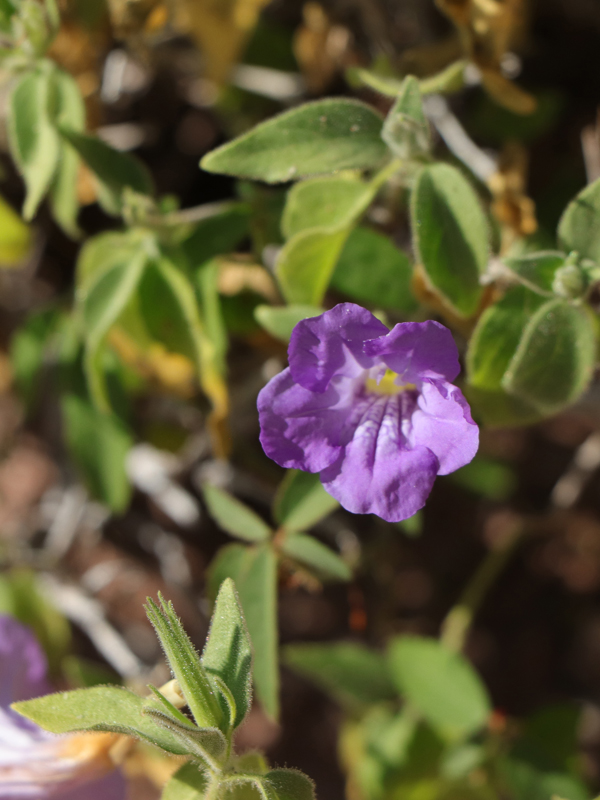
Baja California Wild Petunia (Ruellia californica subsp. californica) is the only subsp. found at both lower elevations near Mulegé & here in the Sierras. It ranges from Bahia de los Angeles to just S of Loreto.
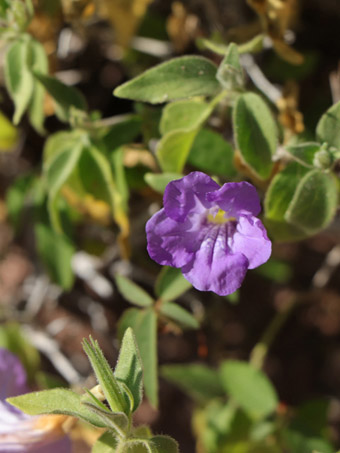
The leaves of this shrubby Wild Peturnia are densely covered with gland-tipped hairs. The entire plant is tacky with a strong, skunk-like odor. The pale to dark purple, 4.5-5 cm D flowers have a whitish tube.
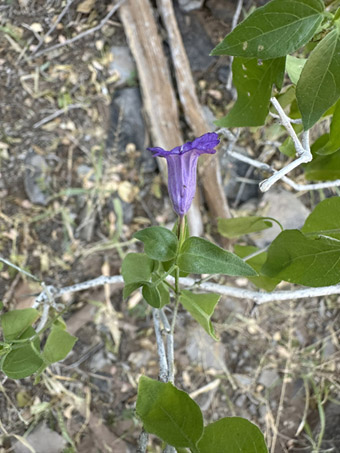
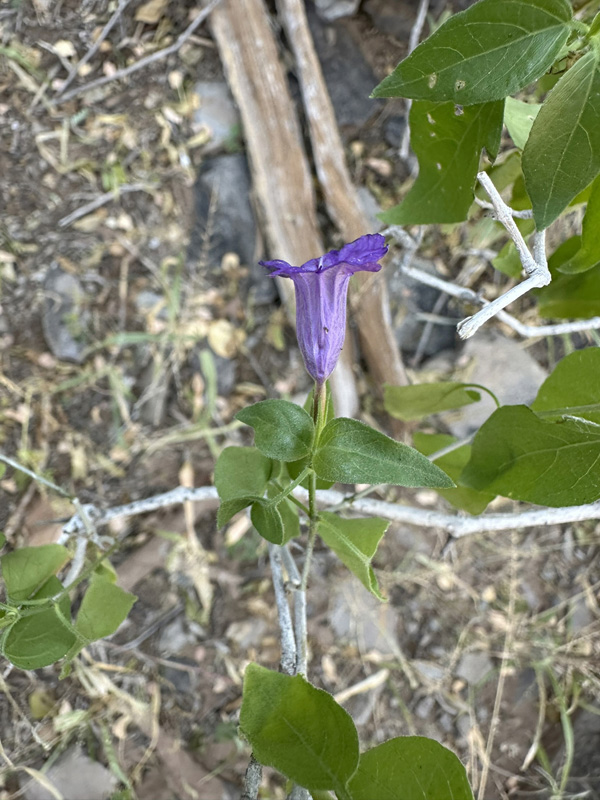
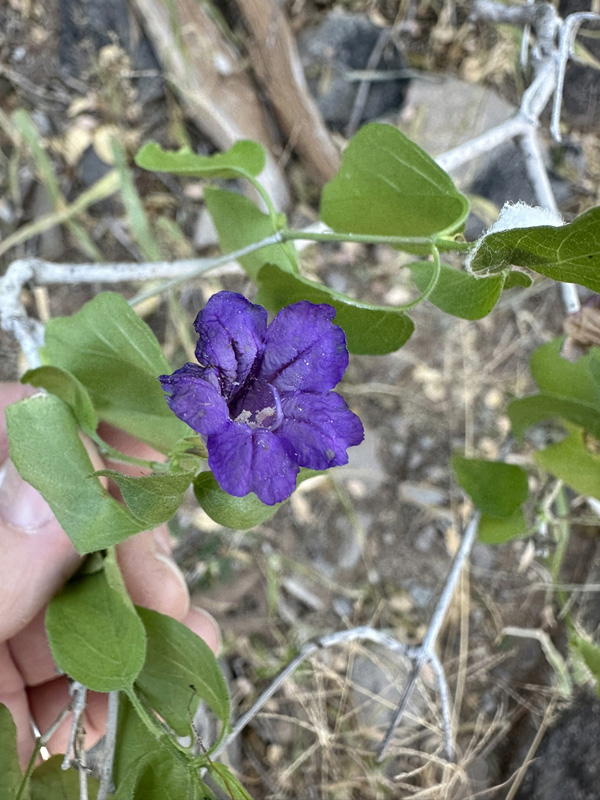
In contrast, R. c. subsp. peninsularis (pictured above) is at its northernmost range here in the Sierra de Guadalupe. It is found southward in the Sierra la Giganta and all the way to the Cape.
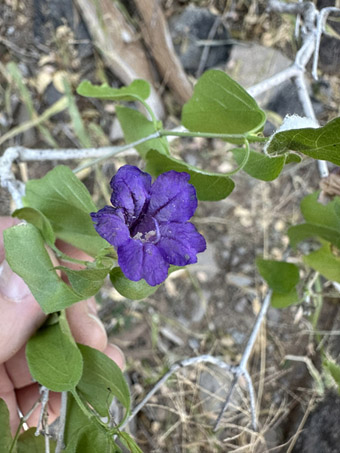
The branchlets, leaves and inflorescences of R.c. subsp. peninsularis are glabrous but glutinous and, as is seen here, the flowers are a deeper violet-purple. The plant has a mild skunky odor.
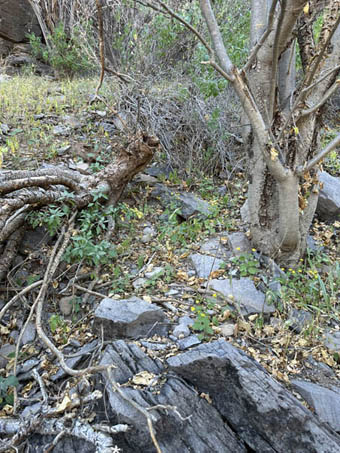
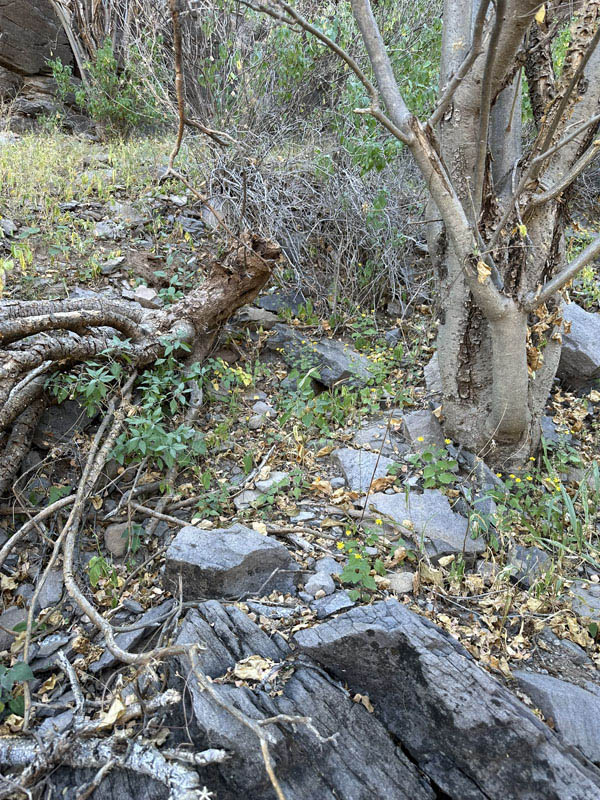
Hillside at the moss/lichen/fern collection site that I visited in both November 2023 and 2024. There was quite a lot of groundcover, with many herbs in flower.
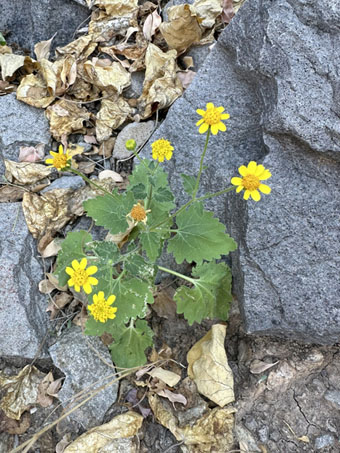
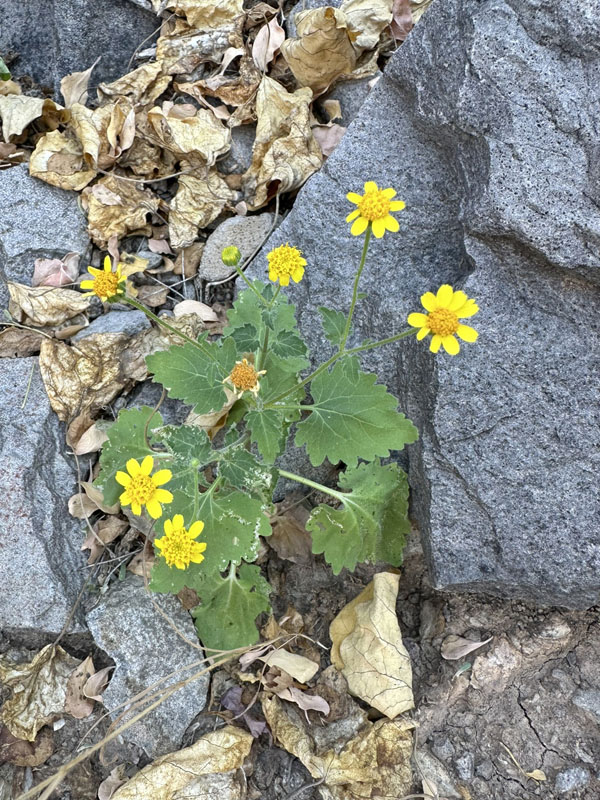
One of those herbs was this California Rock Daisy (Perityle californica). There were many plants, as can be seen in the previous photo.
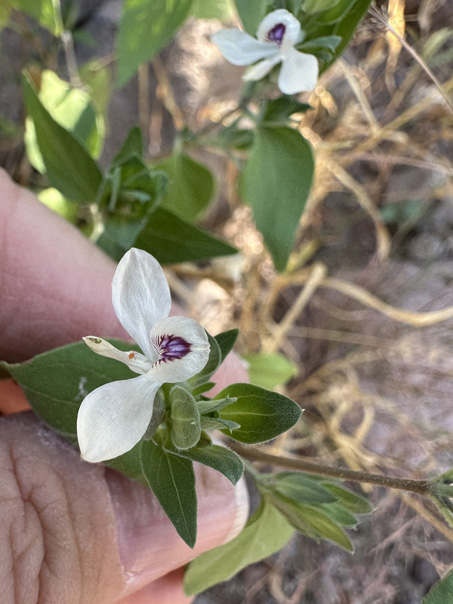
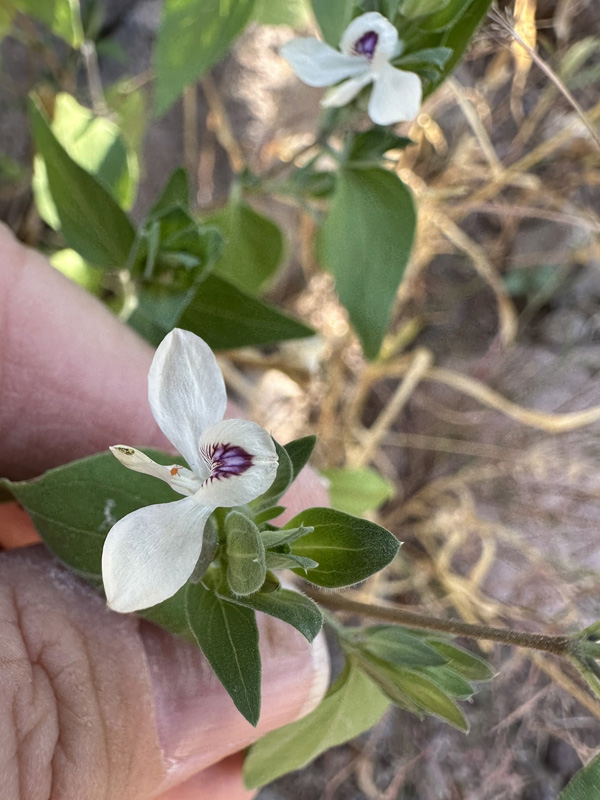
A pleasant surprise was this uncommon perennial shrub, Arizona Wrightwort (Carlowrightia arizonica) in flower. The flower is c. 2.5 cm W and has 2 fused upper petals with a yellow and purple central spot, 2 lateral petals, and a lower keeled petal.
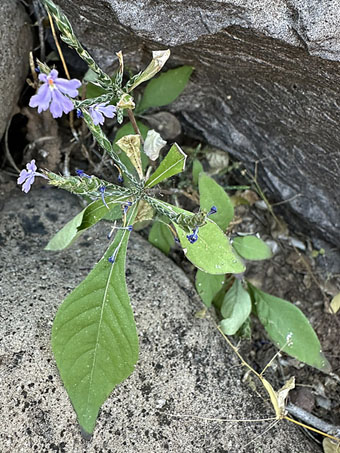
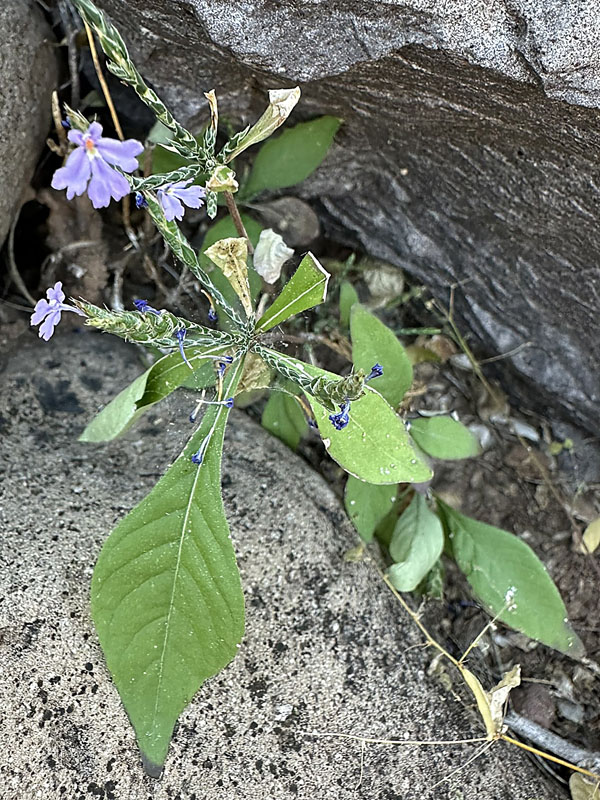
Purple scalystem (Elytraria imbricata) is a small, caulescent perennial herb to 50 cm H. This one is c. 20 cm H. The tubular, bilabiate flowers emerge from within imbricate bracts & are 2.5-5 mm L. The 5 lobed-limb is c. 5-6 mm D.
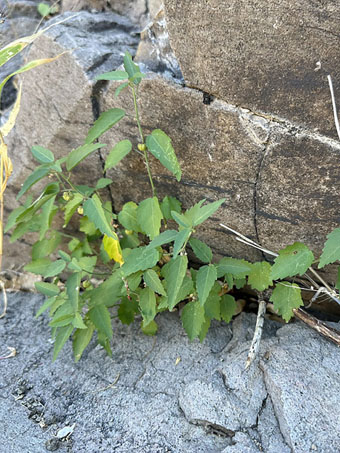
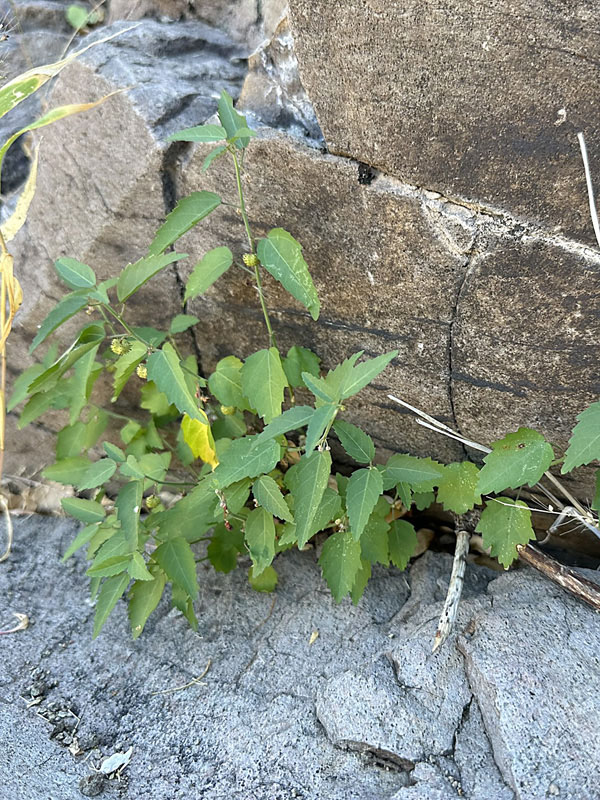
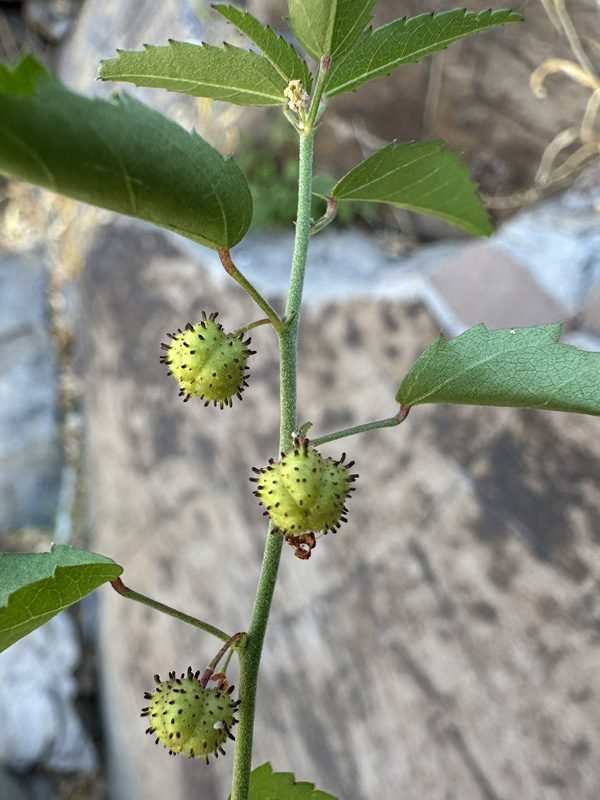
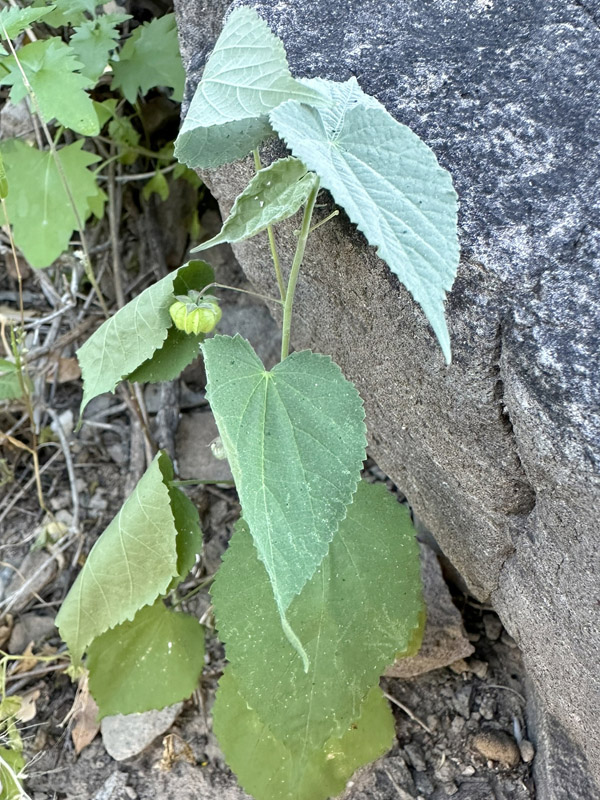
Dwarf Ayenia (Ayenia insulicola) is a rare, native species found from the Sierra Guadalupe to the Cape and in N. Mexico as far south as tropical America.
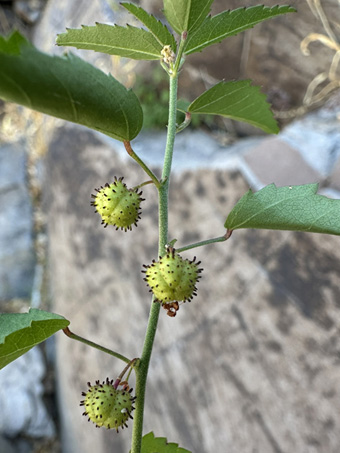
There were no flowers but the fruits of this Dwarf Ayenia are c. 6 mm D with c. 1 mm L papillae. See this image of the flower on iNaturalista.
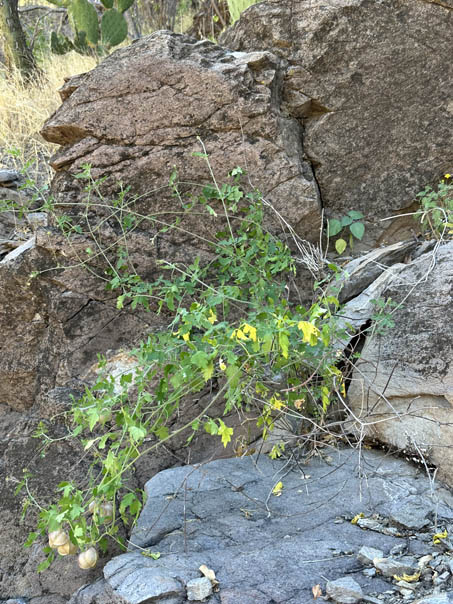
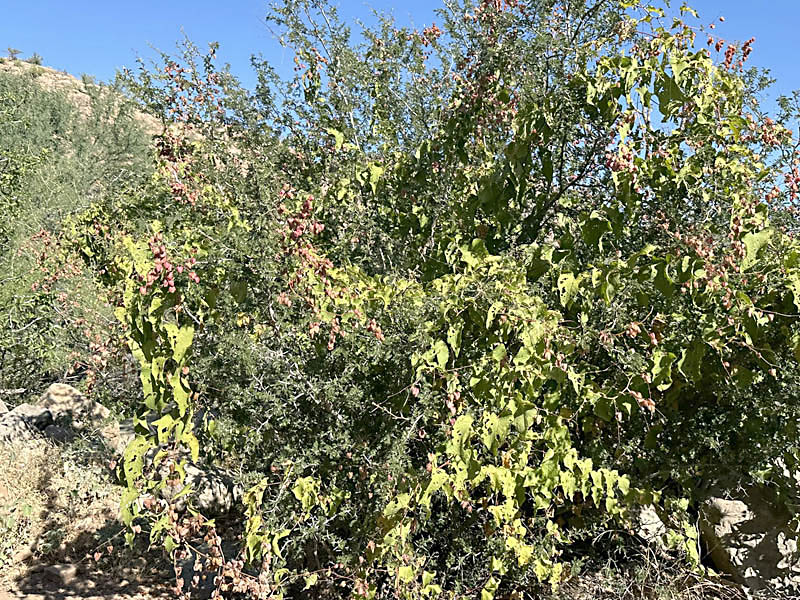
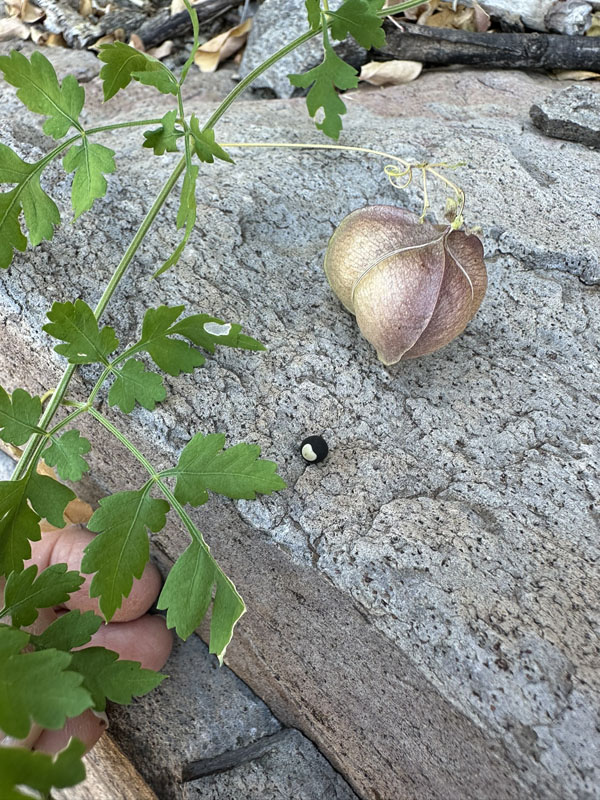
Balloon vine (Cardiospermum corindum) is a perennial woody vine that was abundant along our route. It uses its strong tendrils to climb up into trees & shrubs, often forming a dense blanket of vines.
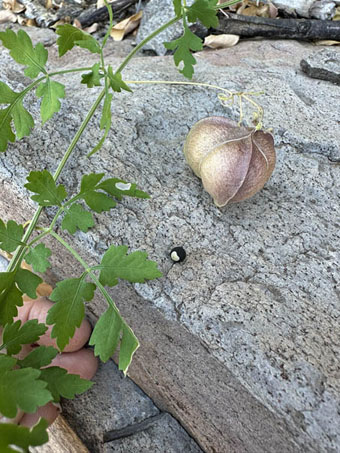
The 3-sided, papery capsules hang in clusters from trees & shrubs & resemble tiny Chinese lanterns. The black, globose seed seen here is c. 5 mm D & has a pale heart-shaped area around the attachment scar.
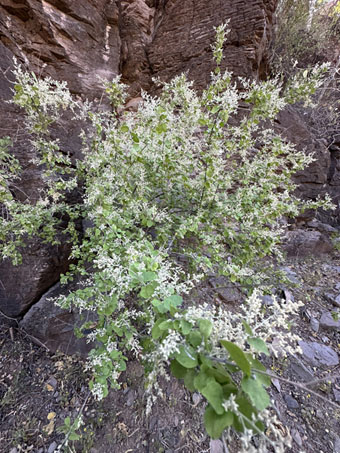
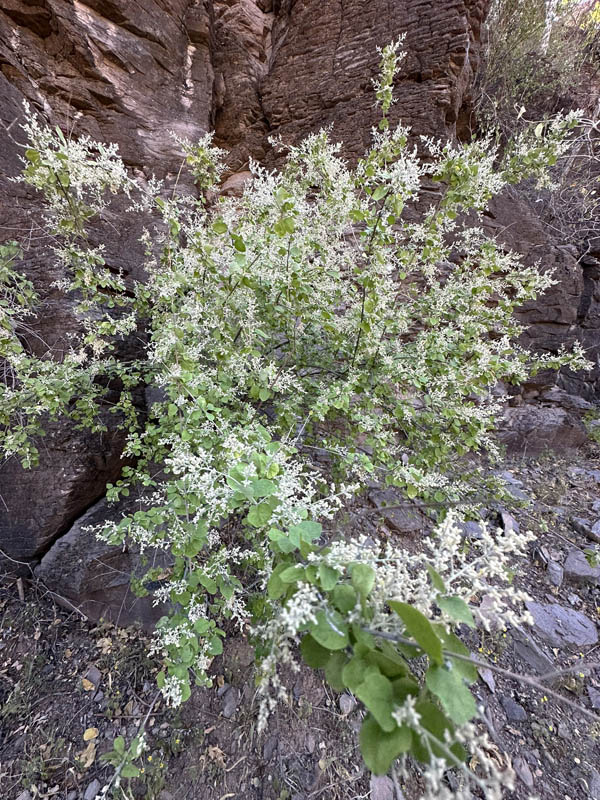
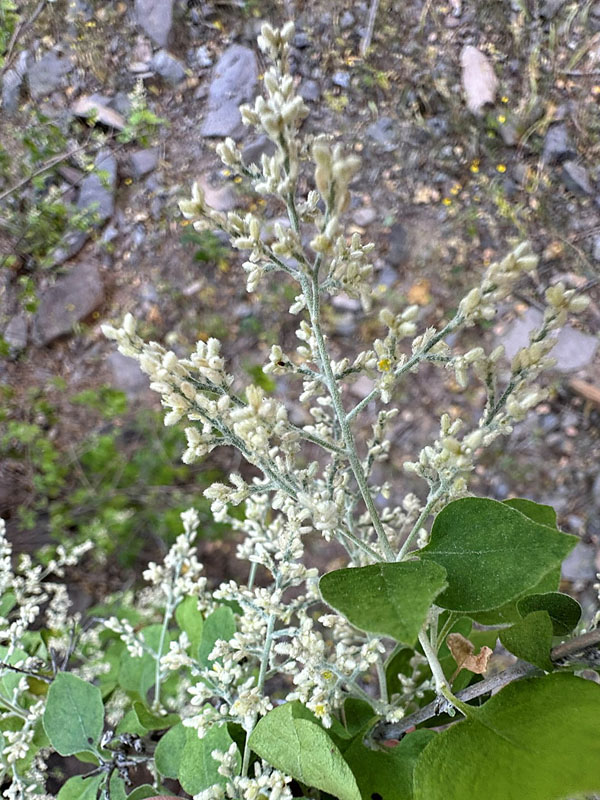
Felt-leaf Bush (Iresine alternifolia) is a shrub native to the central peninsula. Visible here are the flower buds, their calyces covered with long white hairs.
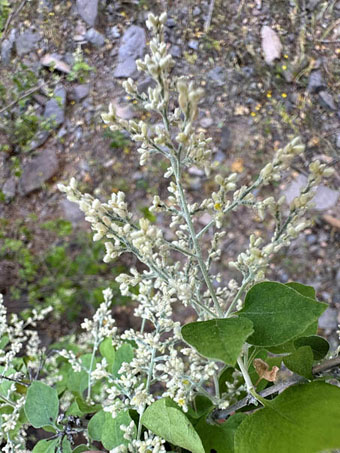
There is an occasional open yellow flower c. 3 mm D. In fruit, the plant has a very wooly appearance. The leaves are pubescent and velvety.
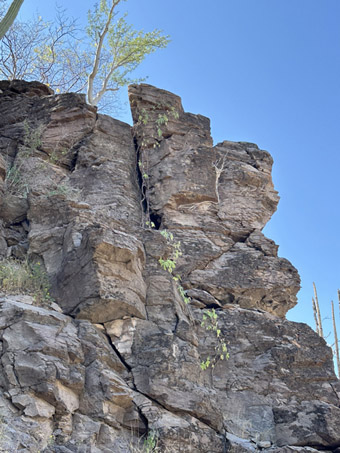
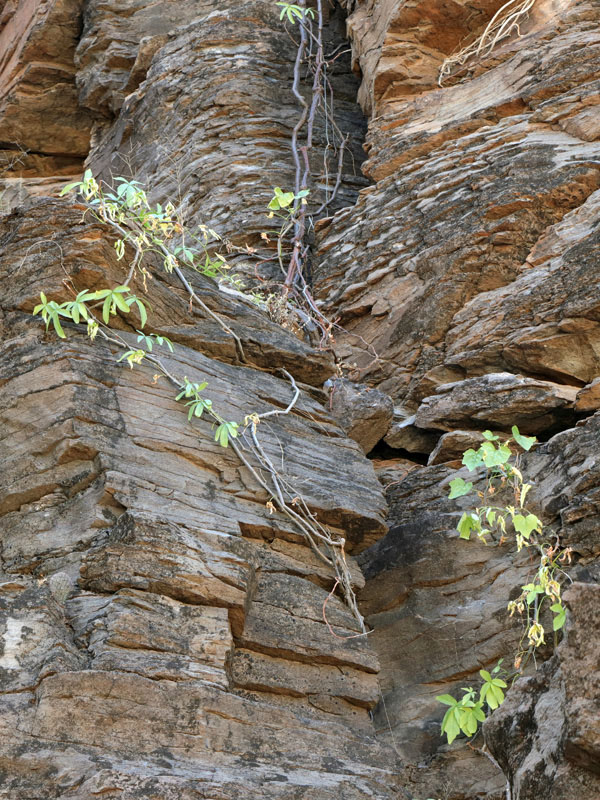
Yuca (Merremia aurea) is the vine that appears to be growing both up & down this cliff. The twining, woody vine can reach well over 5 m L and be very aggressive when it climbs into and on top of shrubs and trees.
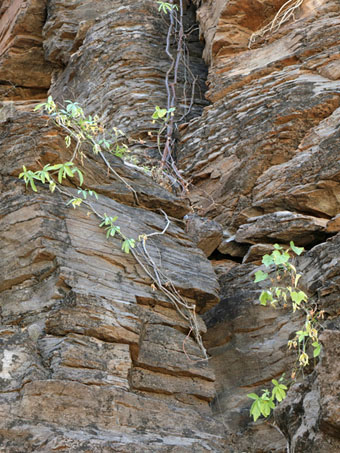
Leaves are palmate and the yellow campanulate flowers are 3-8 cm L. No flowers here, but I saw a single flower earlier as we crossed an arroyo. More common in the hills & arroyos around Loreto, southward to the Cape.
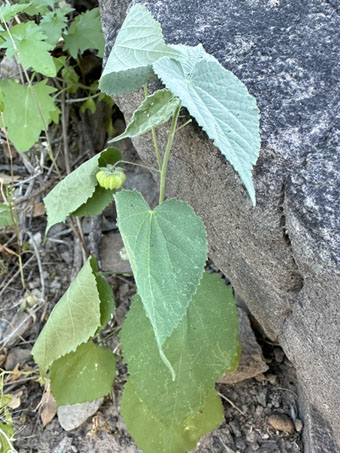
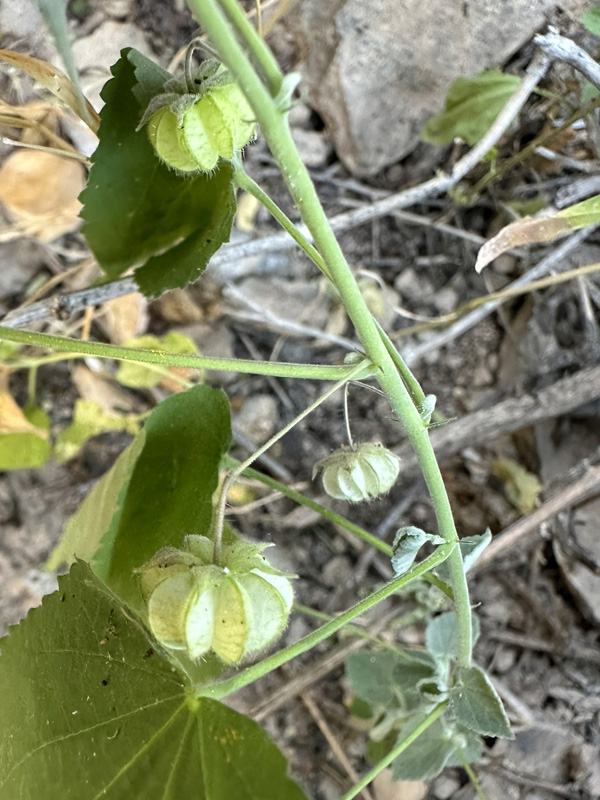
Bladder Mallow (Herissantia crispa) is a common perennial herb in much of the central and southern peninsula.
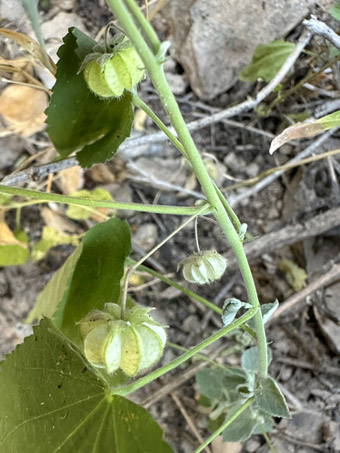
The leaves are velvety soft and the inflated, papery fruit about 2 cm D. A schizocarp, the fruit has 10 to 12 sections (mericarps).
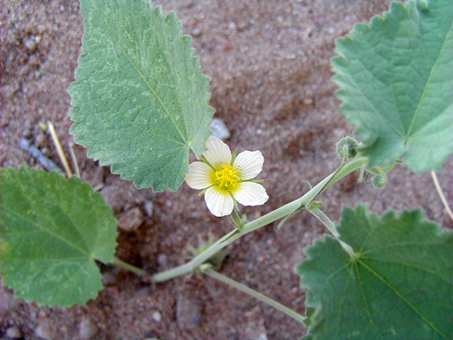
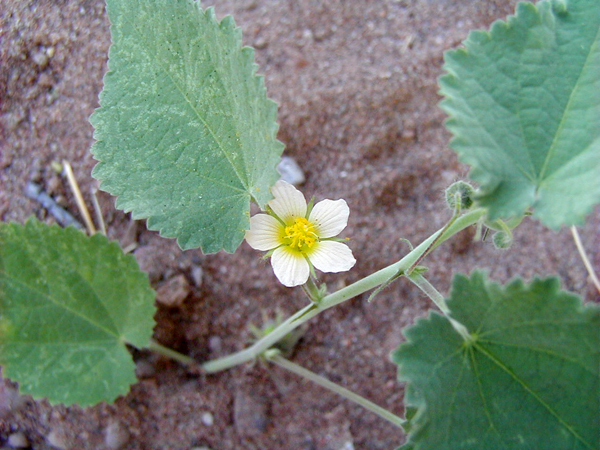
This photo is of a previous sighting of Bladder Mallow from the Cape region. The flower is c. 1.5 cm diameter, each of the white to yellowish petals 5-7 mm L.
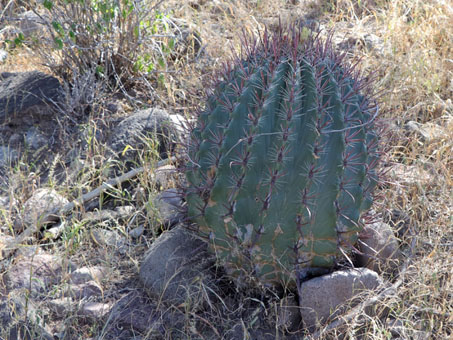
I think this Penninsular Barrel Cactus (Ferocactus peninsulae var. peninsulae) is about a third fatter than it was when I saw it last May.
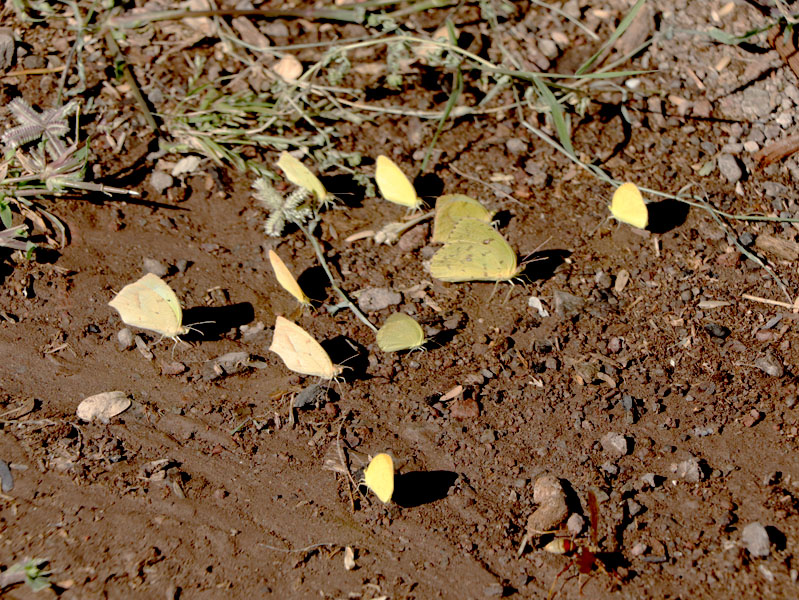
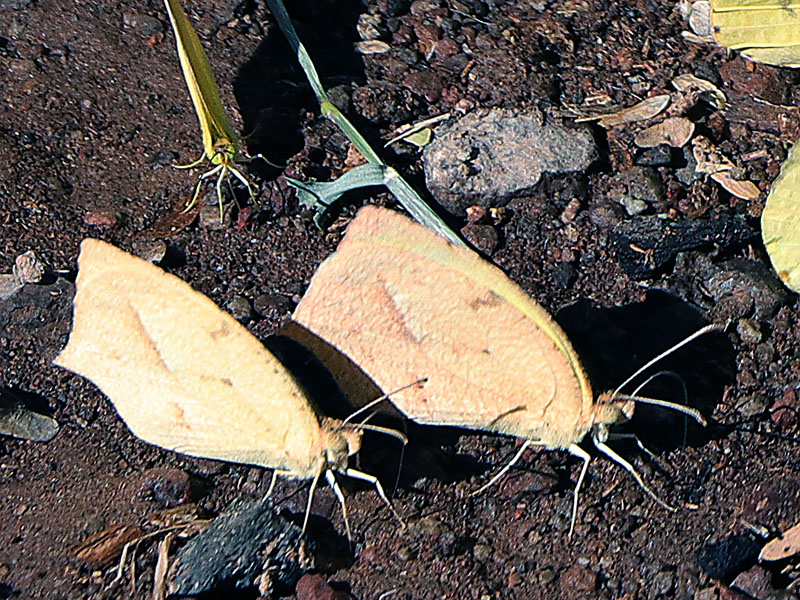
Back at Rancho el Rincón, I was wandering around taking photos when I came across a large wet patch where some gray water was flowing out across the ground. There were clouds of butterflies swirling in the air and every so often 15 or 20 of them would land on the wet spot and line up to drink and ingest minerals from the soil.
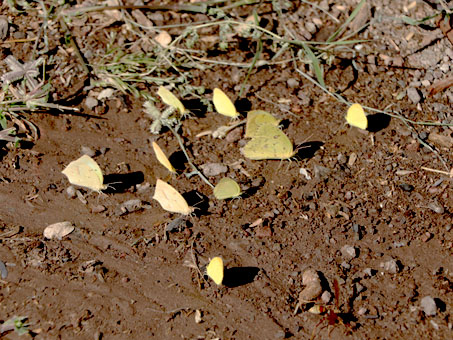
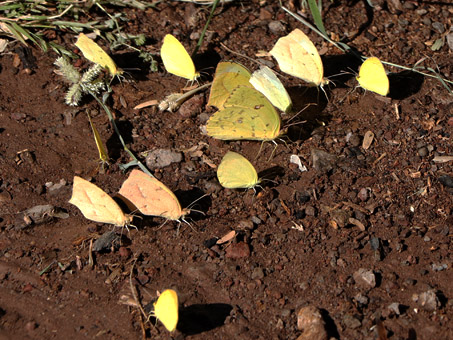
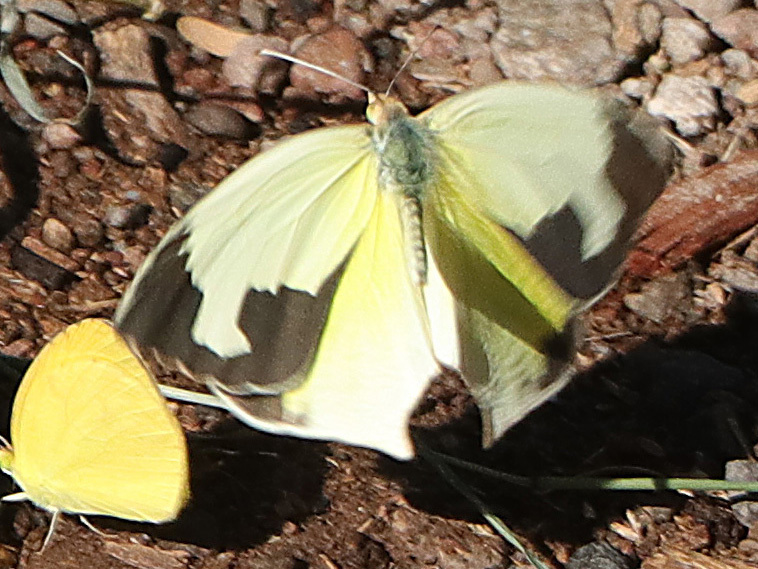
In the close-ups above, there are three sulfur butterfly species: the tiny Mimosa Yellow (Eurema nise subsp. nelphe), the large Mexican Yellow (Eurema mexicana subsp. mexicana) with linear marks and a pointy rear end; and the Marcellina Sulphur (Phoebis sennae subsp. marcellina), the large central one with rounded wings and prominent circular spots .
There are at least two individuals of the second species here that have very different markings. The wings of one only has very small black inner corners of the forewings. The other has a very striking black pattern on the upper surface of both wings. It was difficult to capture these patterns because of how fast this butterfly flaps its wings and then lands with its wings closed. I found out later that I got images of them all on video as well as a few still shots when the camera was set to take rapid bursts.
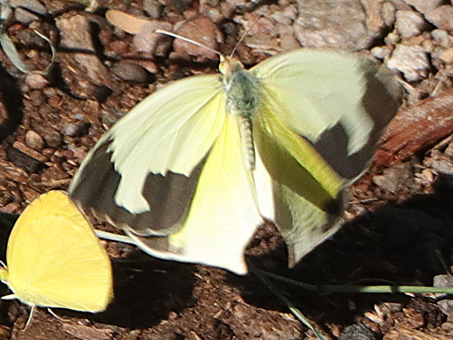
Mexican Sulphur (Eurema mexicana subsp. mexicana).
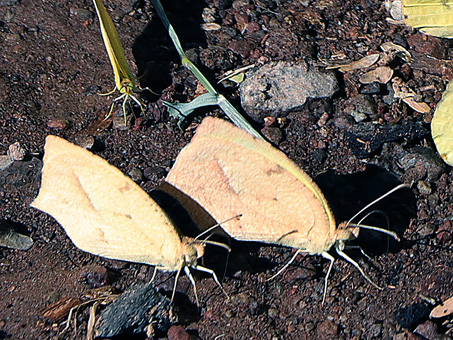
Mexican Sulphur (Eurema mexicana subsp. mexicana).
Along with all of the sulfurs, I also saw a Blackened Bluewing (Myscelia cyananthe subsp. streckeri) flitting about, but I wasn't able to get a good photo. However, I did post this photo on iNaturalist of one individual I saw on a later foray around Mulegé.
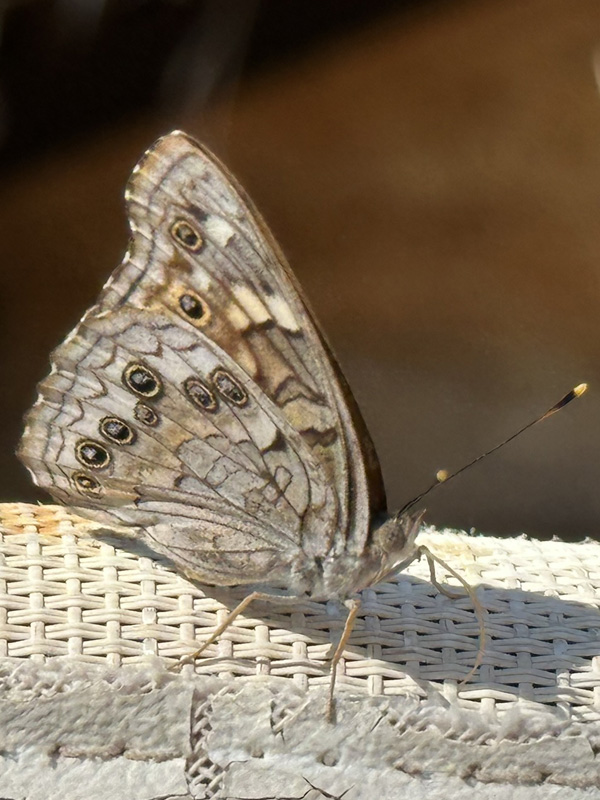
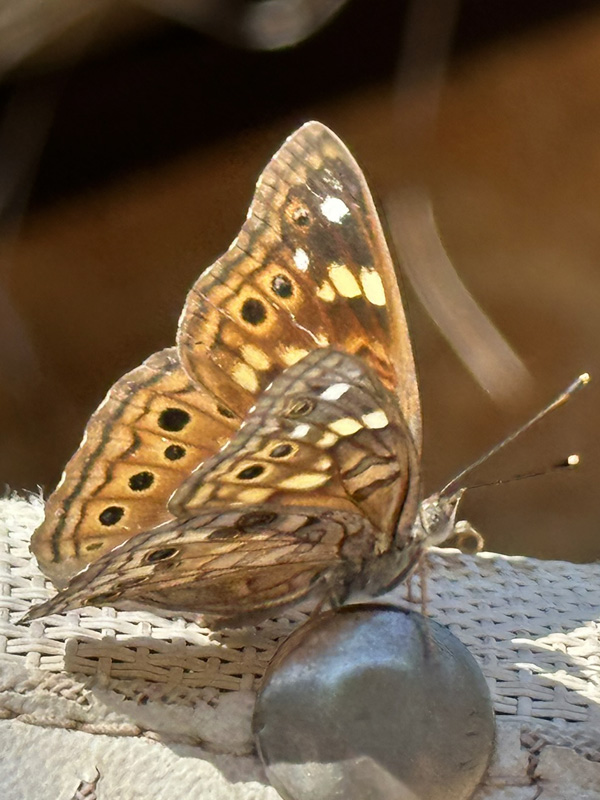
The last butterfly species, another new one for me for the day, was the Empress Leilia (Asterocampa leilia). This butterfly has a lighter brown inferior surface with striking eye markings and is much more ruddy brown or orange above. It was perched on the roof of the buggy and seemed completely oblivious to my presence as I got my phone incredibly close to it. As it walked up and down, it slowly pumped its wings open and closed, as if showing off just for me.
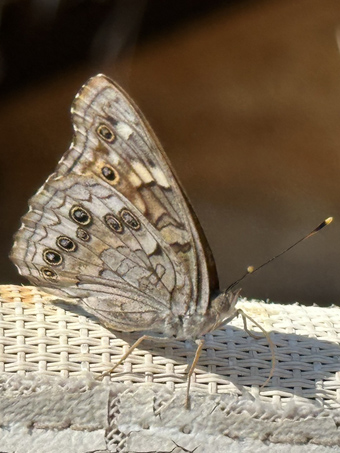
The Empress Leilia (Asterocampa leilia).
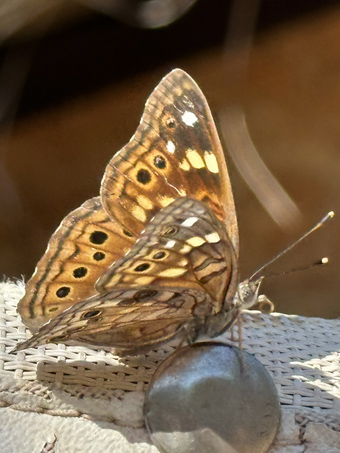
The Empress Leilia (Asterocampa leilia).
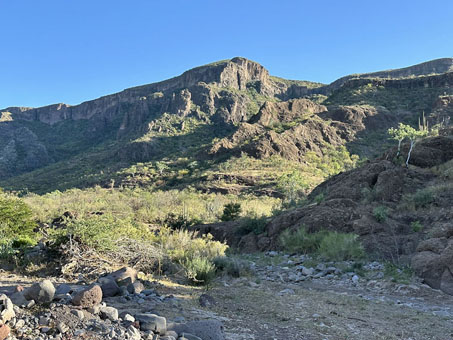
It was getting late when we started back down the hill for home. The change in lighting showed just how green some of the hillsides were.
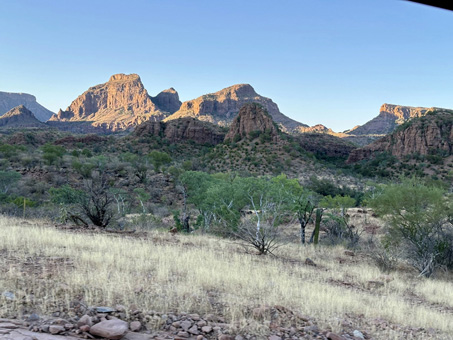
What looked dry and more stark on our way up in full sun now shows more tonal variation.
What a wonderful trip and an amazing butterfly-filled day. All along the way up into the mountains, butterflies were keeping pace with us in the buggy. Then there were all of the butterflies and bugs near Rancho el Ingerto as well as the clouds of butterflies at Rancho el Rincón. On the way home, I was already thinking about my next outing within a short walking distance from my place and couldn't wait to see what was blooming and who was feeding on the flowers.
I hope you enjoyed this issue. Until next time, hasta pronto...see you soon.
Debra Valov — Curatorial Volunteer
For a full inventory list of this month's plants (family, latin name and common names in both English and Spanish as well as links to photos from previous posts or my iNaturalist observations), visit this page.
References and Literature Cited
Rebman, J. P., J. Gibson, and K. Rich, (2016). Annotated checklist of the vascular plants of Baja California, Mexico. Proceedings of the San Diego Society of Natural History, No. 45, 15 November 2016. San Diego Natural History Museum, San Diego, CA. Full text available online.
Rebman, J. P and Roberts, N. C. (2012). Baja California Plant Field Guide. San Diego, CA: Sunbelt Publications. Descriptions and distribution.
Valov, D. (2020). An Annotated Checklist of the Vascular Plants of Mulegé, Baja California, Mexico. Madroño 67(3), 115-160, (23 December 2020). https://doi.org/10.3120/0024-9637-67.3.115
Wiggins, I. L. (1980). The Flora of Baja California. Stanford University Press. Keys and descriptions.